
Growcer’s 2025 Wrapped: Local food impact across the network
Throughout 2025, our network has grown into a global movement spanning Indigenous communities, schools, hospitals, food banks, and grocery stores across 30 countries.
While to this date, we've deployed over 1,000 farms worldwide, for this report we have focused on the 421 actively monitored farms where we have verified data. These specific farms are transforming their communities every single day through hyperlocal food production.
Every farm in our network—from container farms serving remote Indigenous communities to parking lot operations feeding hospital patients—contributed to something bigger.
Here is what we accomplished together in 2025. View our interactive dashboard below and use the impact perspective generator to visualize the scale of our collective impact.
The Hyperlocal Advantage
What makes these numbers possible? It isn't just about growing food; it's about where and how we grow it. These results stem from the fundamental difference between hyperlocal farming and traditional agriculture.
Why Local Production Matters
🥬 Extended Shelf Life: Our hyperlocally-grown produce stays fresh for up to a month, compared to just 3–7 days for transported greens that travel an average of 2,400 km (1,491 miles).
🚚 Zero Food Miles: Production at the point of consumption eliminates long-haul transportation, drastically reducing spoilage and slashing carbon emissions from the supply chain.
🏞 Less Land Needed: Whether you’re growing food in an under-utilized parking lot or squeezing a container farm (about the size of 4 parking spaces) next to your hospital, it’s never been easier to grow fresh food year-round using less space.
🗑️ Reduced Waste: Longer shelf life means less food ends up in landfills. By preventing spoilage, we prevent the methane emissions that occur when food decomposes.
💧 Less Water Consumption: Our recirculating hydroponic systems use 92% less water than traditional farming. Water is a precious resource, let’s use it wisely.
🥗 Peak Freshness: Harvest-to-table happens in hours, not days or weeks. This means superior nutrition, better taste, and a product that communities are proud to eat.
🎓 Youth Education: Our farms serve as living classrooms, offering students hands-on opportunities to learn about sustainable agriculture, STEM skills, and business, inspiring the next generation of food leaders.
🤝 Community Connection: Beyond calories, these farms become hubs for connection—bringing people together for harvest days, workshops, and shared meals, strengthening the social fabric of our neighborhoods.
Small Local Impact —> Big Global Impact
Of course the impact across the network looks impressive, but what matters most is the daily impact of each project.
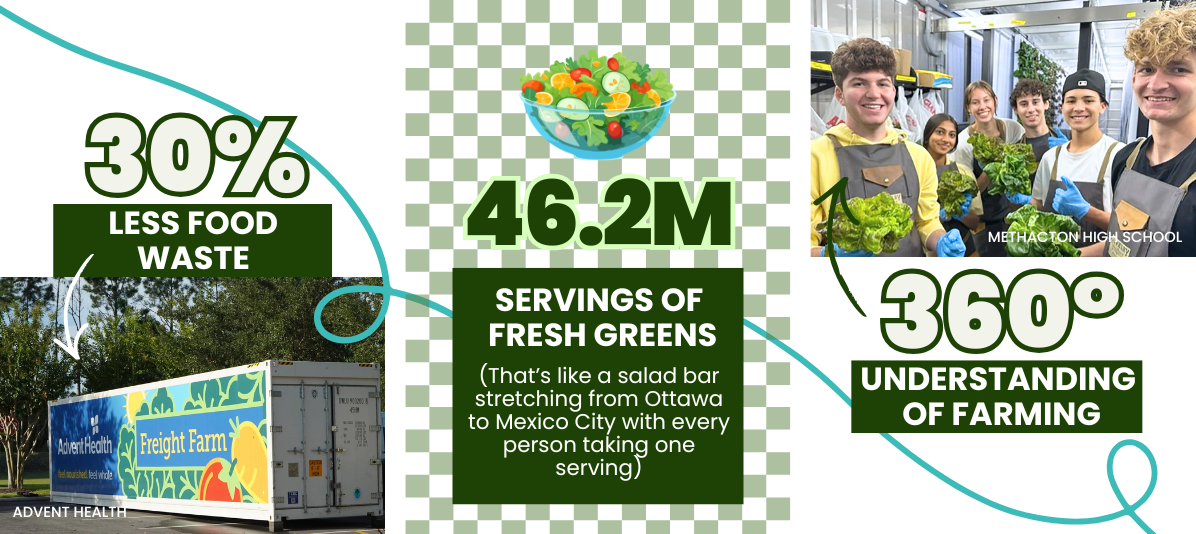
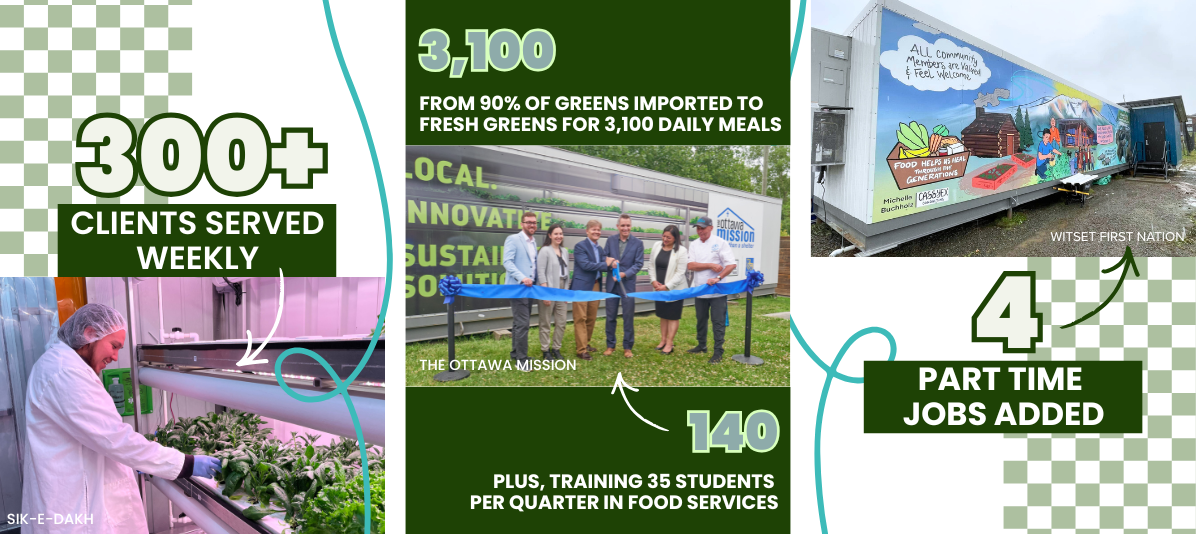
Almost 50M servings across the network? Cool. We’re still thinking about that one 10th grader who had their first salad because their school division runs a Growcer farm to provide fresh salads for their school and neighbouring schools.
Around the weight of 1,767 polar bears of food waste avoided? Cool. We’re still amazed at a 30% reduction in food waste by one hospital that has a Freight Farm in their parking lot.
All of these “small” impacts add up.
Join the Movement
These numbers tell a big story, but the real impact happens on the ground. It’s driven by hundreds of local champions—people just like you—who decided to take ownership of their food supply.
When you launch a Growcer farm, you aren't just buying technology; you are joining a network of innovators who are redefining food sovereignty for their communities. Whether you are looking to create jobs, improve health outcomes, or simply grow the freshest food your community has ever tasted, there is a place for you in this movement.
Want to bring hyperlocal food production to your community?
Let's talk about how a Growcer farm can fit into your vision for food sovereignty so that you, too, can make a measurable impact on our world.