

Live online | Farm to School Month
What a School Farm Grows Beyond the Cafeteria
Wednesday, October 28, 2026 | 2pm ET/ 12pm MT
Can’t make it live? Register anyway and we’ll send you the recording.

Grow Food. Grow Skills. Grow Leaders.
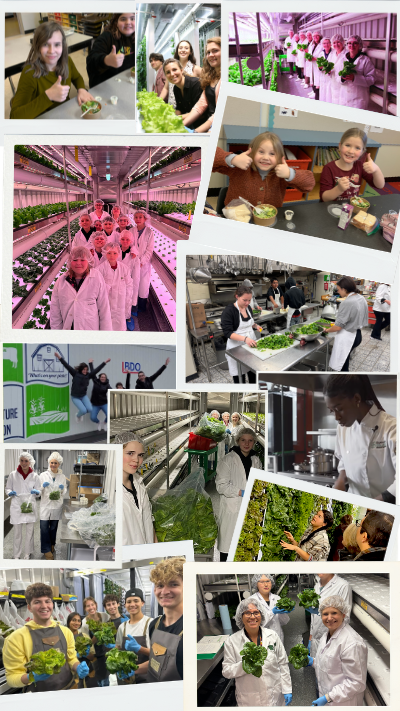
This Farm to School Month, we're bringing together schools and districts from across Canada and the U.S. where year-round hydroponic farms have become part of how students learn.
Students run a working farm as part of their coursework, building skills in science, agriculture, business and leadership, from planting to harvest and sales. What they grow goes to school meals, school stores and local families.
Hear how they fit the farm into their timetable and curriculum, who runs it, how they funded it, and what it has meant for student engagement and wellbeing.
What to Expect
Practical answers from schools that have built a farm into their programs, found the funding, and made it work day to day.
How six schools, from a 70-student rural school to a district of 8,400 students, built a farm into their programs
How the farm connects to courses and credits in STEM, agriculture, CTE and food literacy
What educators have seen in their students: engagement, skills and confidence built through hands-on responsibility
The practical side: staffing, schedules, summer operations and support
The funding paths these schools used, and the options open to schools right now
Live Q&A
Hear from the Schools Who've Done It
Meet the Schools | Moderated by Nick Halverson, Growcer
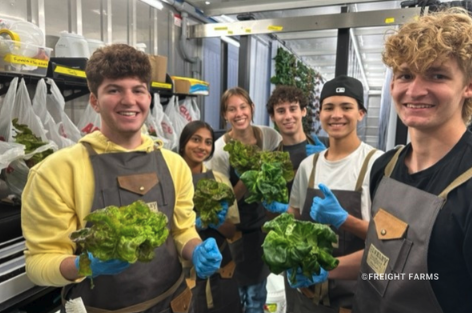
Methacton High School
The farm anchors a Hydroponic Farming course that counts toward students' STEM requirement. Students run every part of the operation, from planting to invoicing, and supply a local zoo, a restaurant, a faculty produce subscription and nearby food pantries.
“Between the two of us and all the years we've been teaching, we've probably had zero students say, ‘I want to be a farmer.’ Now we have students changing their majors because of this class.”
— Jeremy Walton, Hydroponics Teacher
Funded by the Methacton Education Foundation.
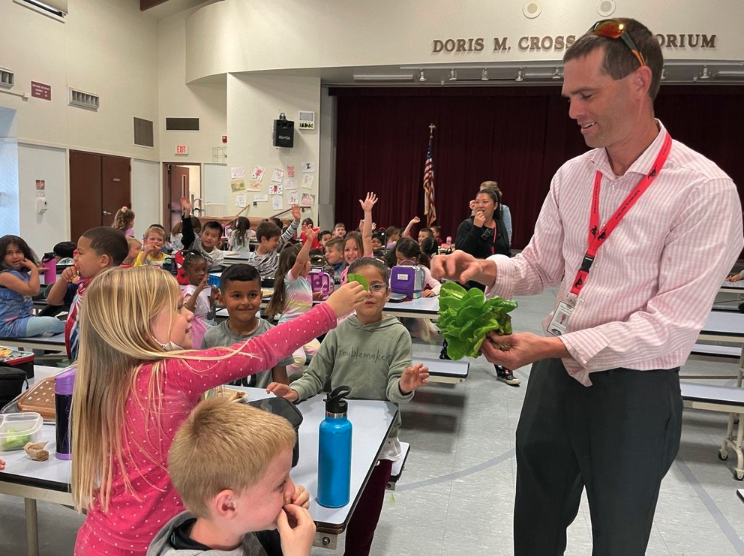
Morgan Hill Unified School District
District farm to cafeteria | California
Serving 8,400 students, the district runs two Freight Farms that grow lettuce for high school chef's salads, middle school salads and elementary salad bars, for less than the district would pay to buy it.
“Our Freight Farm is innovation in action!”
Dr. Carmen Garcia, Superintendent
Funded through the district nutrition budget.

Altario School
A K-12 school of about 70 students, 50 km from the nearest grocery store. Students in grades 7 to 12 help run two Growcer farms as part of an agriculture program built around career pathways, supplying community subscribers, the school store, a seniors' lodge and the weekly hot lunch.
“It's totally different than sitting in a classroom studying. It's hands on and it's a nice environment.”
Ellen Van Lagen, Teacher
Funded through the Local Food Infrastructure Fund, the local agricultural society and the school division.
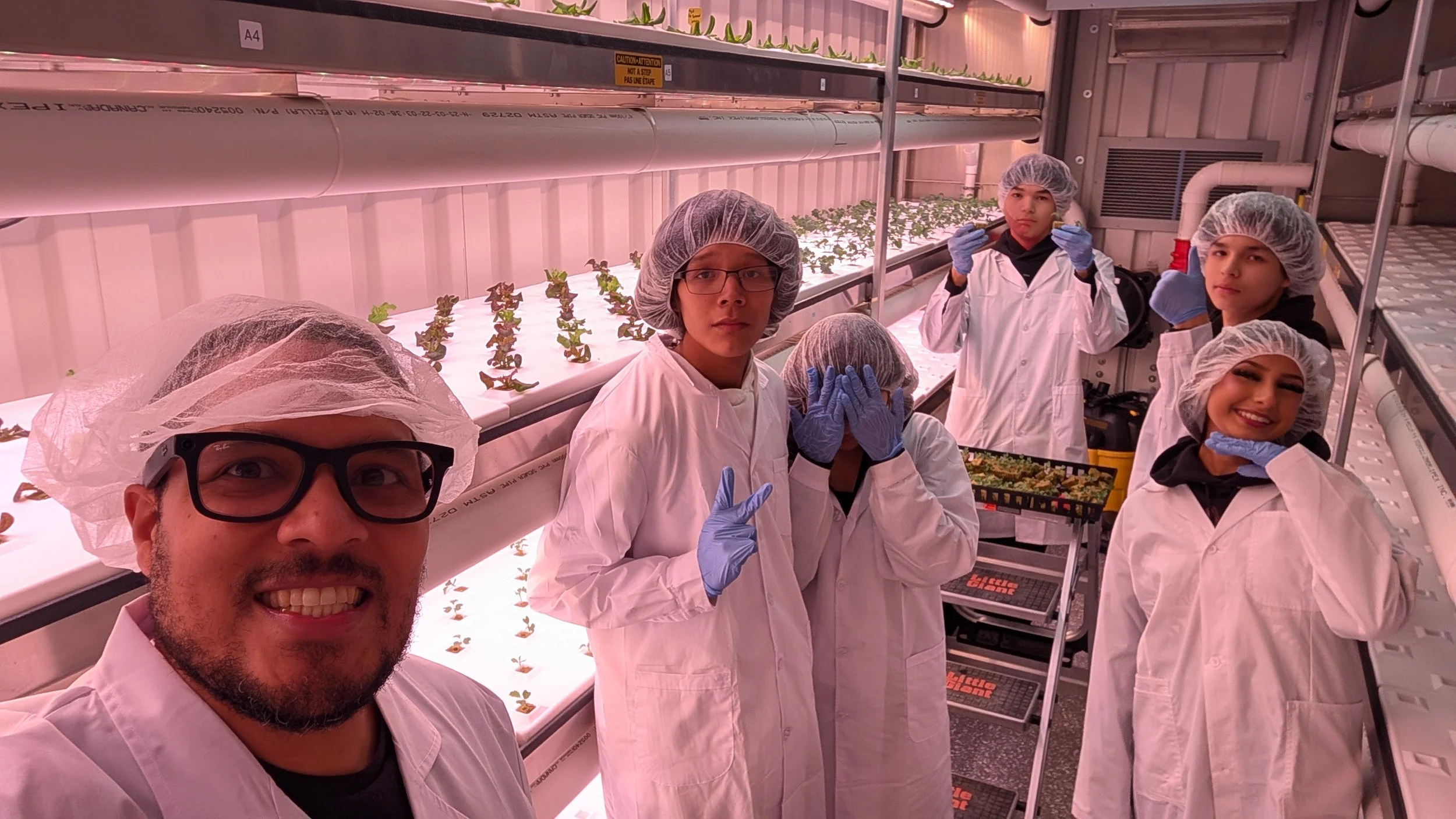
Mamawi Atosketan Native School
The school's student-led farm project won the 2026 Zayed Sustainability Prize for the Americas. The prize funds a Growcer Education farm for the school lunch program, a monthly soup kitchen and community food programs. First harvest this October.
“For us, this project is not only about food, but also about possibility. It's about empowering young people to see that their ideas matter, their actions make a difference, and their voices can create real change.”
Melanie Dussaye, Sustainability Coordinator
Funded by the Zayed Sustainability Prize, building on earlier FortisAlberta and ATCO grants.
Alexis Nakota Sioux Nation School
The Nation's school serves 241 students aged 4 to 21, west of Edmonton. Students in grades 4 to 6 grow spinach, kale and lettuce for the cafeteria and take the harvest home, with lessons tied to the Alberta curriculum and land-based teachings.
Supported by a Farm to Cafeteria Canada Seed Grant.

The Growcer farm and hub give students in Swan Valley School Division hands-on, year-round agricultural and vocational training while building a fresh food program for schools across the division.
“Students at various levels are learning about growing food sustainably and gaining skills they can apply to future careers. Those that work in the Growcer enjoy the environment as it is nice and bright and warm especially throughout the winter.”
Kari Goethe, Environmental Management teacher at SVRSS
Supported by a provincial vocational-school grant, federal grant, and partnership with the local Kinsmen Club.
Swan Valley School Division
“Between the two of us and all the years we’ve been teaching, we’ve probably had zero students say, ‘I want to be a farmer.’ Now we have students changing their majors because of this class.”
Jeremy Walton, Hydroponics Teacher, Methacton High School
“So I was like wow, this can be something very special for the community, food wise, and for the students, career pathway wise.”
Kevin Van Lagen, Principal, Altario School
How Schools Like Yours Got Started
And proof it can work at yours, too.

Altario School
Agriculture and career pathways | Alberta
Local Food Infrastructure Fund · Local agricultural society · School division
Morgan Hill Unified School District
District farm to cafeteria | California
District nutrition budget
Methacton High School
STEM elective | Pennsylvania
Methacton Education Foundation
Mamawi Atosketan Native School
Land-based learning | Alberta
Zayed Sustainability Prize · Earlier FortisAlberta and ATCO grants
Get Growcer’s Funding Mobilization Team Behind Your Project
Help Us Help You
Funding is the biggest barrier for most community food projects, and it's the one we're built to help with. Tell us your vision, and our funding mobilization team will help you find the grants, foundations, and programs that fit, and reach out when new opportunities land on our radar.
$12M +
Secured for local food infrastructure projects
50-70%
Success Rate
Industry average 10-15%
4x
More likely to get approved