
A Year-Round Classroom: Swan Valley School Division's Growcer Farm
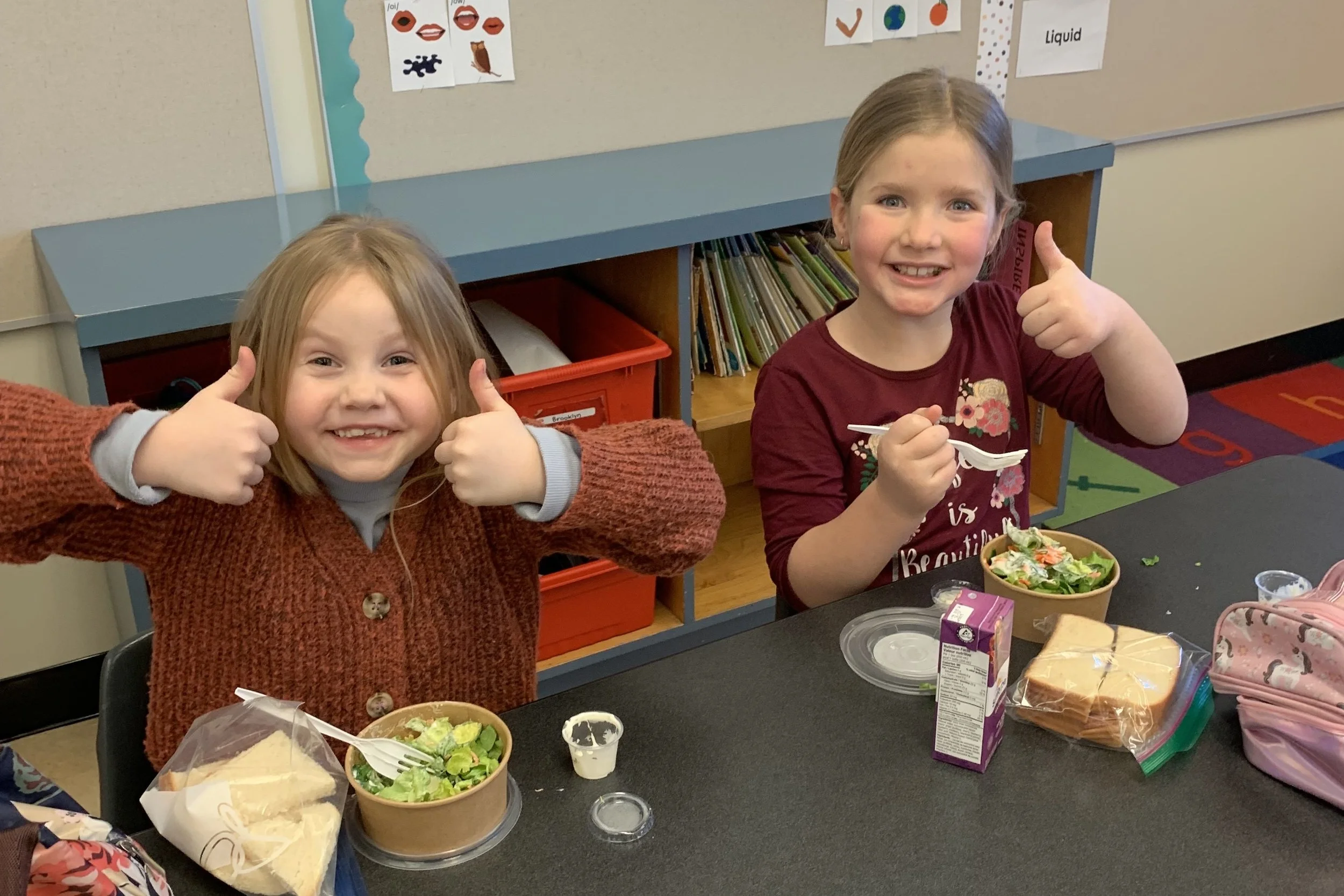
Students at a Swan Valley District School eating the greens that were grown in the Growcer farm
Project at a Glance
Launched: Summer 2024, Swan River, Manitoba
Goal: Give students in Swan Valley School Division hands-on, year-round agricultural and vocational training while building a fresh food program for schools across the division
Distribution: About 400 salads distributed weekly to K-8 schools division-wide, plus daily use in the Culinary Arts program at Swan Valley Regional Secondary School (SVRSS)
Impact: Students are eating fresh salads, building skills, and agriculture is now part of the curriculum year-round.
Operator: Kari Goethe, Environmental Management teacher at SVRSS, with an educational assistant and students from her Applied Resource Management course
“It’s been a wonderful addition to our school community. Students at various levels are learning about growing food sustainably and gaining skills that they can apply to potential future careers. Those that work in the Growcer enjoy the environment as it is nice and bright and warm especially throughout the winter”
- Kari Goethe, Environmental Management teacher at SVRSS
Swan River, Manitoba, sits hours from a major city, in a school division of about 1,400 students spread across seven schools. Kari Goethe teaches Environmental Management at Swan Valley Regional Secondary School, and for years her outdoor garden beds gave students only a few weeks of hands-on growing before summer break emptied the classroom.
Lana Sagert, former vice principal of vocational education and facilitator for NITT at Swan Valley School Division, helped Goethe look for something that could run through the other ten months of the year.
On a visit to another school in central Saskatchewan that had a Growcer farm, the teachers learned that it was never about students eating more salads. It was understanding the logistics of getting that salad and the cost of getting that salad acts as a barrier for some students. This project would aim to provide more opportunity, in skills, in food, and in future opportunity.
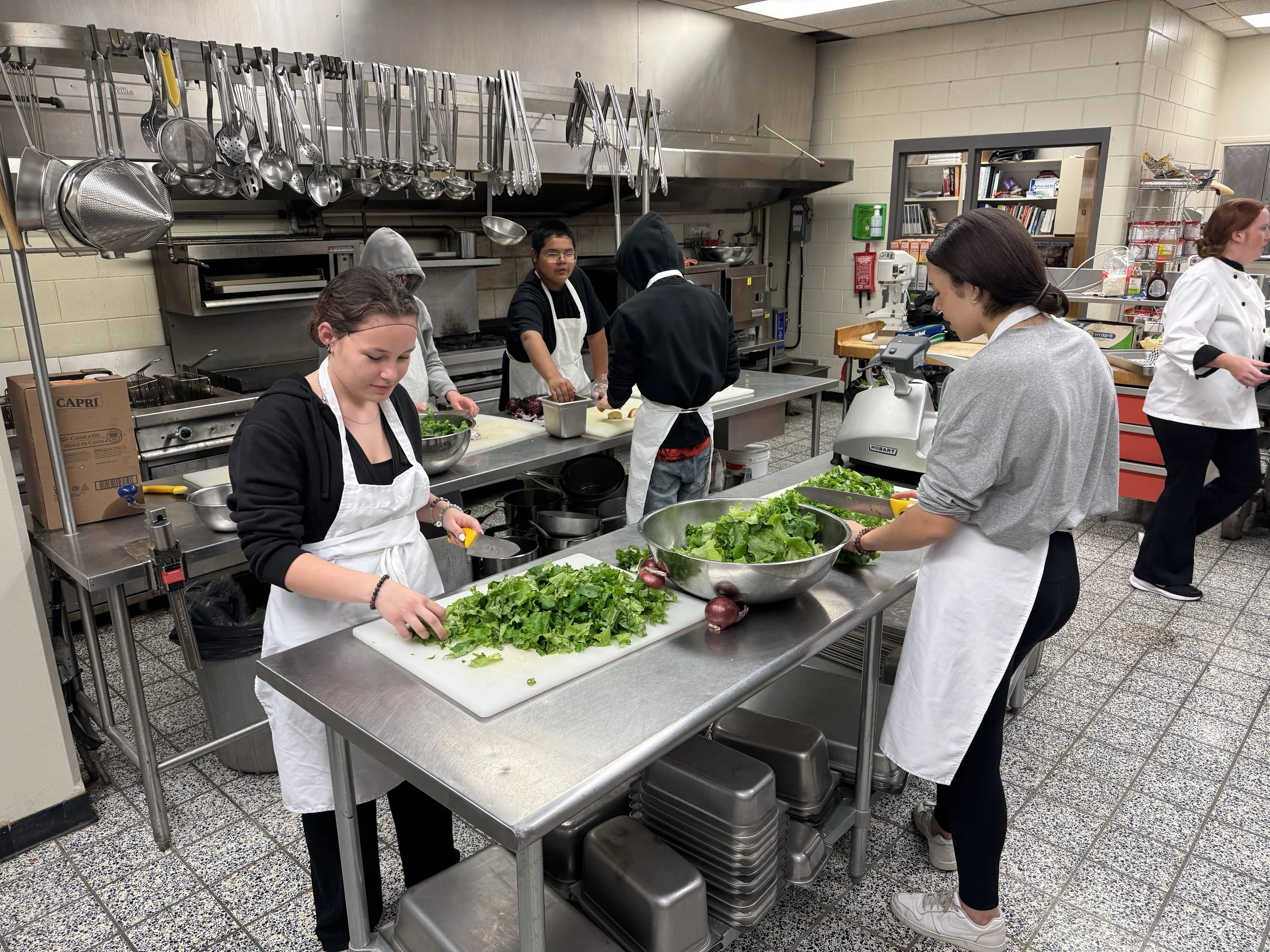
Cafeteria prep for student lunches
Opportunity: The Cost of a Salad
In Swan River, a package of romaine hearts could run close to seven dollars, while a bag of chips sat at two. For families already stretching a grocery budget, that math wasn't close. Fresh produce was something families drove for, paid a premium for, or went without.
Goethe had been trying to teach students about food and growing for years using outdoor beds, but the school year and the growing season barely overlapped. Students planted in May, and were gone by the time anything worth harvesting came in. The lesson about where food comes from kept ending before it really started.
The two constraints, cost and access on one side, a growing season that didn't match the school calendar on the other, pointed toward the same kind of answer: something that could grow indoors, year-round, regardless of what the Manitoba winter was doing outside.
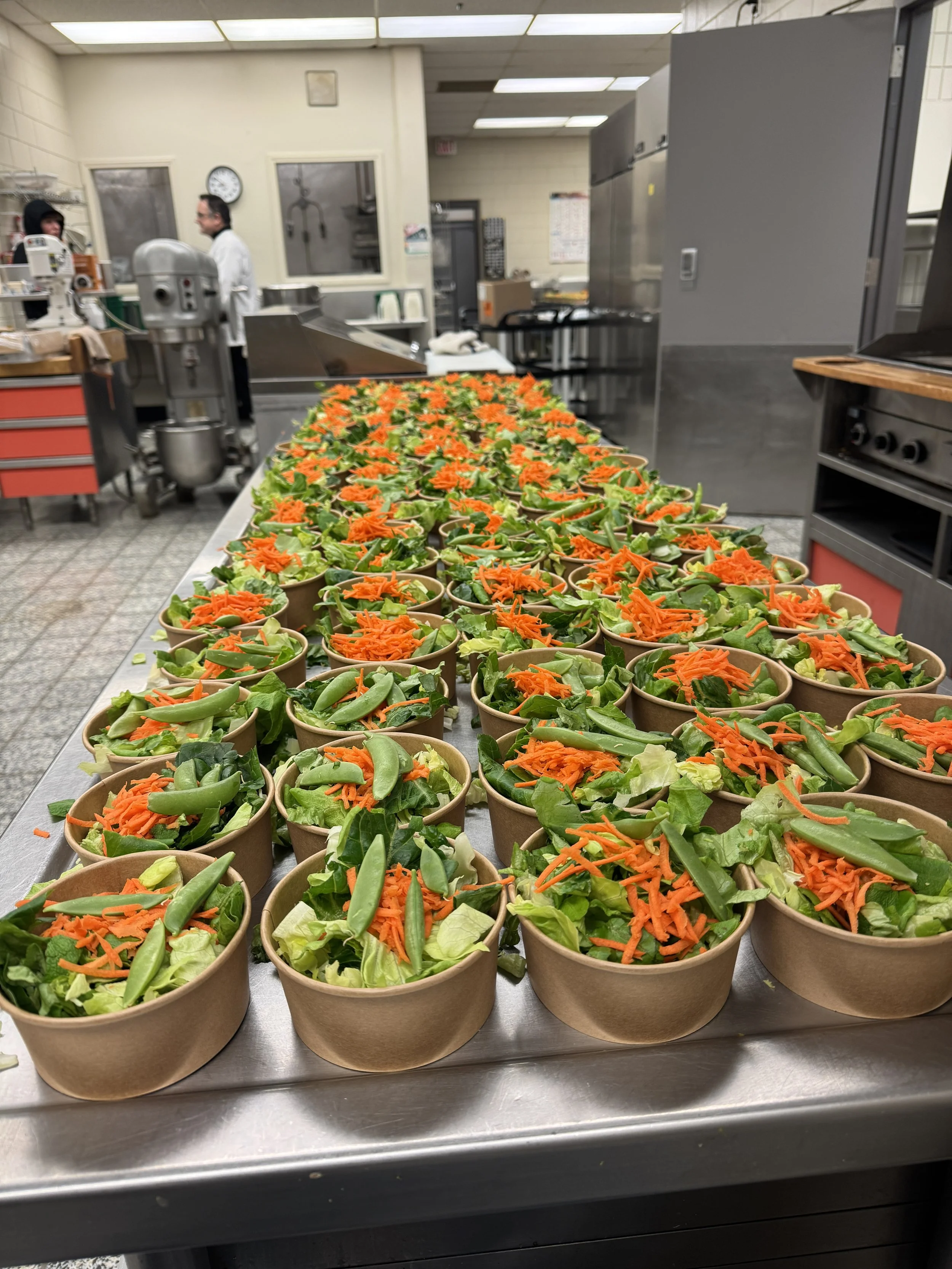
The primary goal was to provide year-round, hands-on opportunities for students to gain practical skills. Providing healthy food to all the students in the school division was simply a bonus when adding the division’s Growcer farm.
Solution: Going Big, Not Small
Here's the thing other school divisions considering this should know: Sagert and Goethe could have started small. A single rack. A scaled-down setup to test the waters and see if it stuck before committing further.
They didn't. They decided that if they were going to do this, they were going to do it right the first time.
"We were able to, we went for the gusto and planned and did everything so that we could do it all, right?" Sagert says.
"We had to go all in, because as you guys in education know, sometimes they build you beautiful labs and beautiful sites, but the upkeep's not there. So we felt that we needed to go for the full thing, all the lights, all everything in it, because we were getting one chance to do this," Sagert says.
If you're already convincing your board, your community, and yourself that this is worth doing, you might as well build something that can carry the weight of everyone's excitement. So they went for the complete farm, both racks, plus the Growcer Hub, a companion unit with sinks, fridges, and prep space built in.
That's not to say it was smooth. Training arrived in mid-August, but the school year hadn't started yet, so the farm didn't actually run until mid-September. That gap meant a lot of phone calls back to Growcer just to confirm they were doing things right. Then, mid-winter, a deep cold snap froze part of the HVAC system. This is the part every school division should hear: they didn't have to solve that alone. Growcer's support team worked directly with a local contractor to get it fixed, and by the next winter, Swan Valley had its own preventive fixes in place before the cold came back. That's the reassurance worth passing along to any school division nervous about taking this on: you're not left holding it by yourself when something breaks.
Creative Funding: One Grant Snowballs Into Many
If you're a teacher or administrator wondering how on earth a small rural division affords something like this, here's the honest answer: they didn't fund it with one grant. It came together in pieces, and it happened faster than they expected once it started moving.
A provincial vocational-school grant, applied for and won two years running. A federal infrastructure grant, secured by partnering with the local Kinsmen Club. And then, once people could see something real taking shape instead of just a proposal on paper, more support started finding them.
"So then we got brainstorming and looked up, and Growcer popped up on her screen, and we sent an email to [Growcer’s] Nick about information, and got all kinds of information, and found there was some [farms] close enough to us, and yeah, it kind of snowballed really quick," Sagert says.
That's the pattern worth remembering if you're at the start of this yourself: get one grant, get something visible on the ground, and people start wanting to be part of it. The Kinsmen Club's involvement grew past the initial funding, too, and helps cover a portion of the yearly operating costs.
One tangible project gave a small division a reason for a lot of people to show up and help.
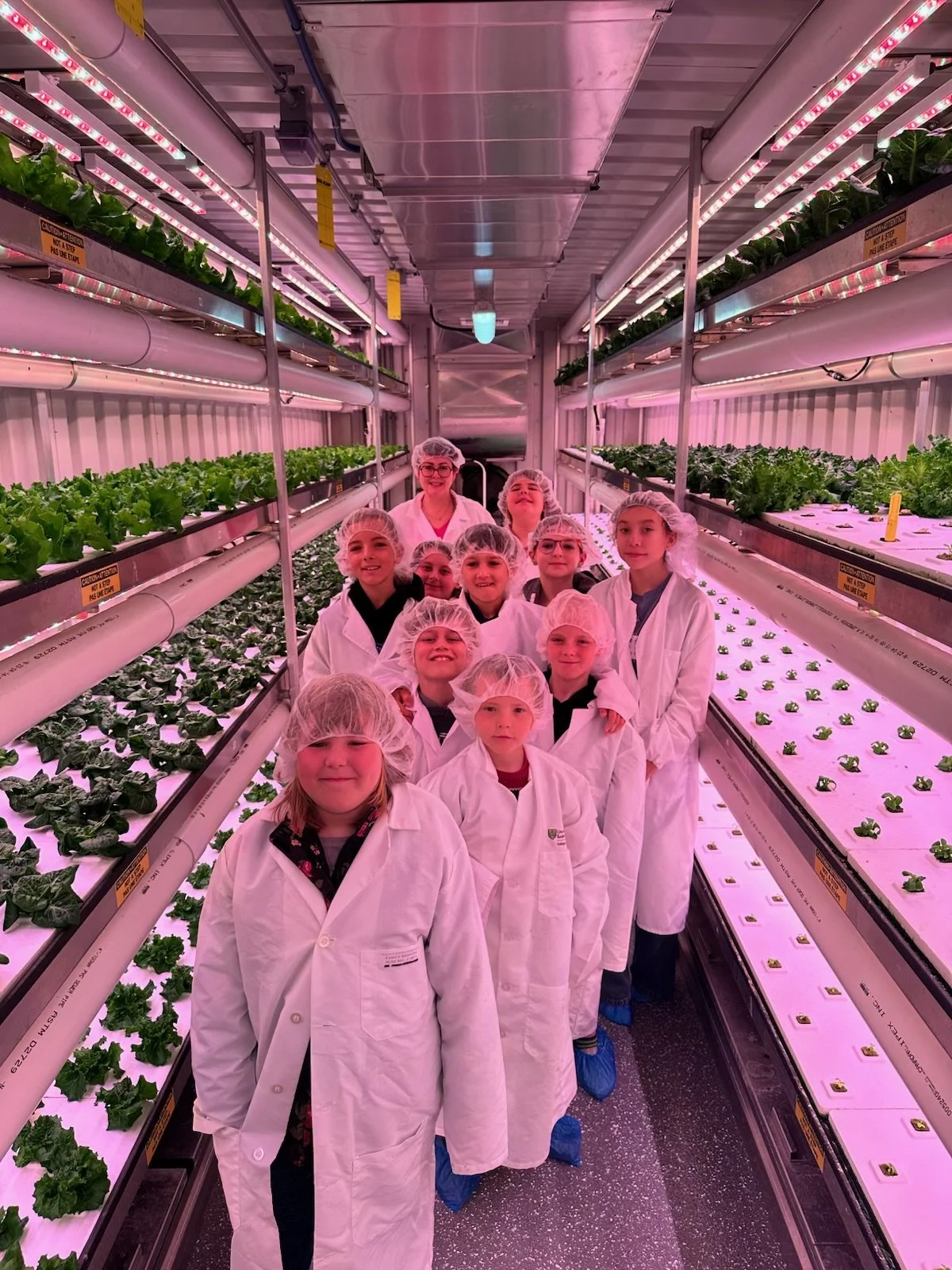
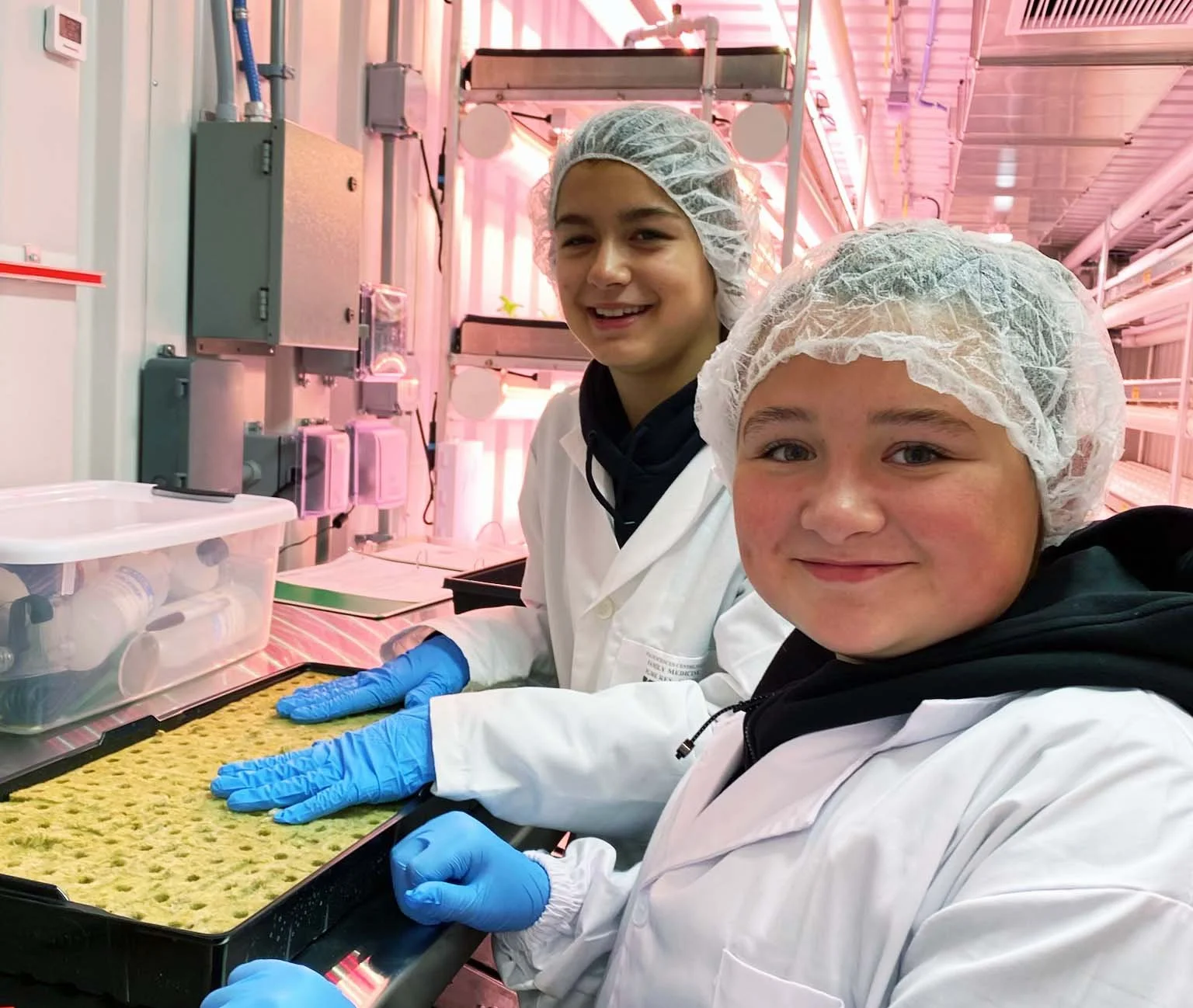
Community Impact
The students also responded well to the novelty of growing fresh greens year-round. On a class tour, a group of grade 4 students was handed fresh-cut lettuce leaves with nothing on them, no dressing, no dip. Only one of fourteen didn't eat it. Students at K-8 schools involved in the free salad program sent thank you cards back to the high school.
Staff have noticed the produce itself, too, not just the novelty of it.
"That's the biggest thing that I've heard from everybody is how it tastes. Like it's unbelievable. The other thing is the storage of it. The hub comes with a fridge in it, and they can sit in the fridge for two weeks. For us, because where we are, the lettuce is coming from Mexico or Southern U.S. It's been transported for over two weeks and it goes bad right away. Where this stuff here, it’s unbelievable how long you can actually keep it," Sagert says.
Then there's the part that matters most for a rural division like this one: what happens after graduation. The skills students pick up in the farm, testing pH, dosing nutrients, running a growing system day to day, aren't abstract. Two hours from Swan River, in Dauphin, there's a large tomato-on-the-vine greenhouse that supplies Costco. It needs people who already know how to do exactly what these students are doing every week. That's not a someday skill. It's a right-now, hireable one.
"There might not be a test or curriculum to follow, but it's those skills that we're trying to get, the hands-on, job-ready skills that they will have by working in the Growcer and moving on from there to other careers," Sagert says.
For a student growing up hours from a major city, that's not a small thing. It's proof that a career in this field doesn't require living in the city, and if a student does decide to leave, it's proof they'll have something worth bringing back.
If you're a teacher or a division office weighing whether something like this is worth the effort: it breathed new life into this school. Staff talk about it. Parents ask about it. Students who've never had a reason to get excited about a science elective look forward to a chance to work in the farm. One tangible project did all of that.
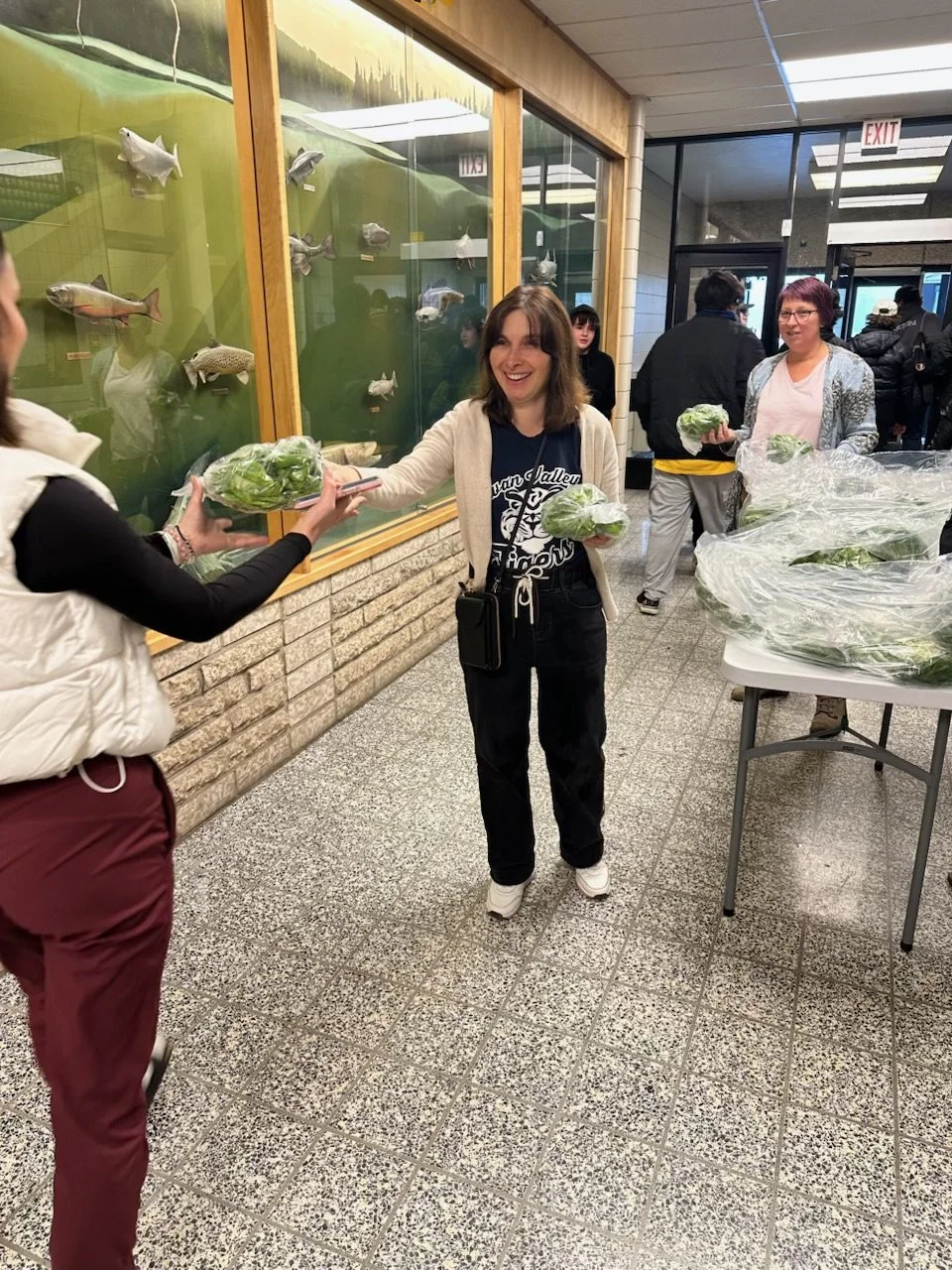
High schoolers who received bagged lettuce before the holidays carried it home to family, and staff members continually hear about it from parents.