
A Freight Farm Becomes a Living Laboratory: Riverdale Country School, the Bronx
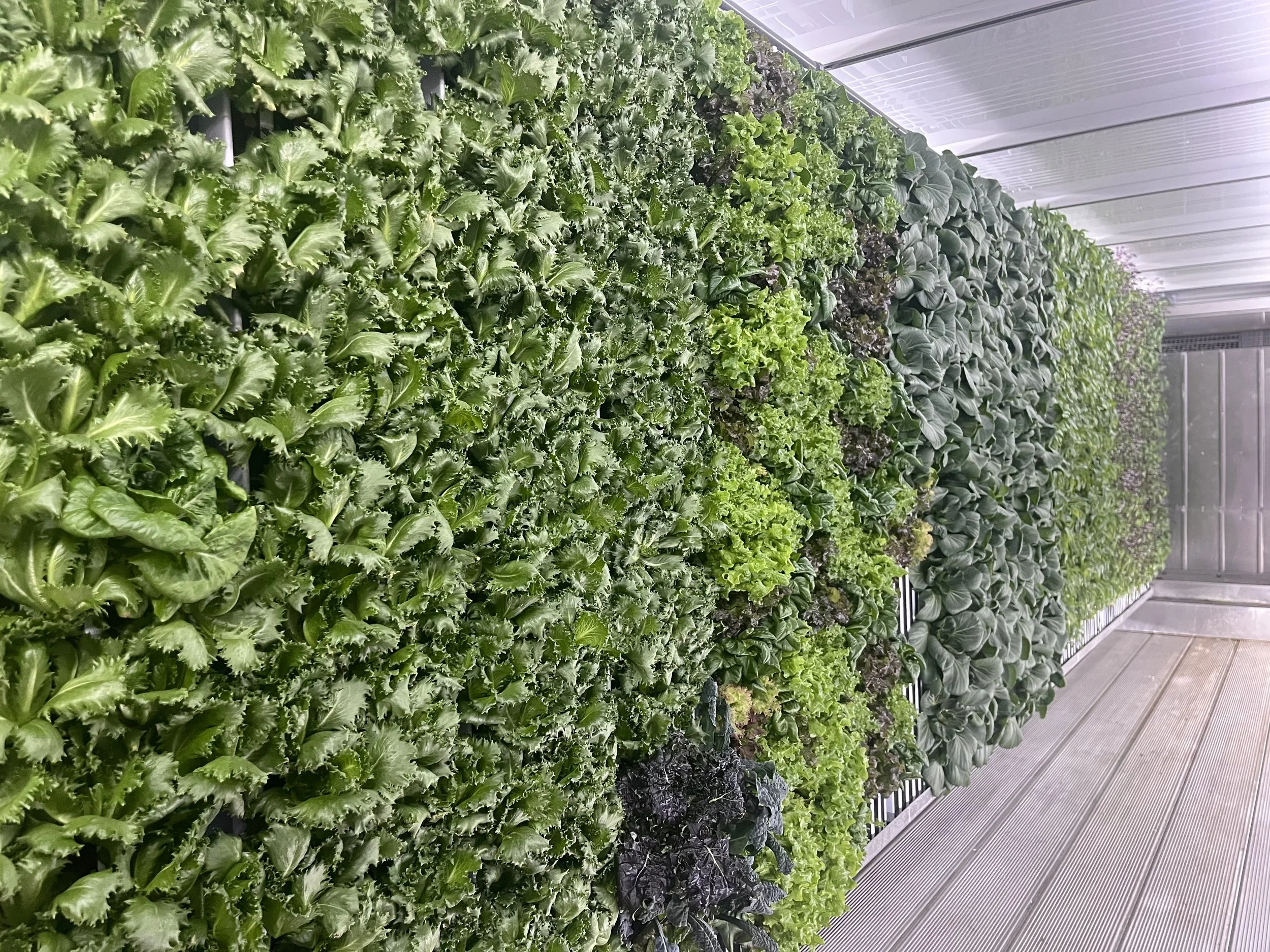
Adding a farm breathes new life into turning the classroom into a “living lab.”
Project at a Glance
Launched: January 2025, the Bronx, New York
Goal: Bring year-round local food production and cross-disciplinary, place-based learning to an independent school campus in New York City
Distribution: School cafeteria during the academic year; donated to the Riverdale Neighborhood House and the Friendly Fridge network over the summer
Impact: Roughly 1,000 pounds of produce in the first year, at half capacity by design; farm visits woven into classes across departments, from Spanish to science research; every sixth grader harvests and cooks a meal from the farm
Operator: One lead farmer with a rotating crew of teacher volunteers and students
“You see a student in the cafeteria who grew the thing, who transplanted the thing, who harvested the thing, and they light up. Those are the moments where I’m like, this is why we did it.”
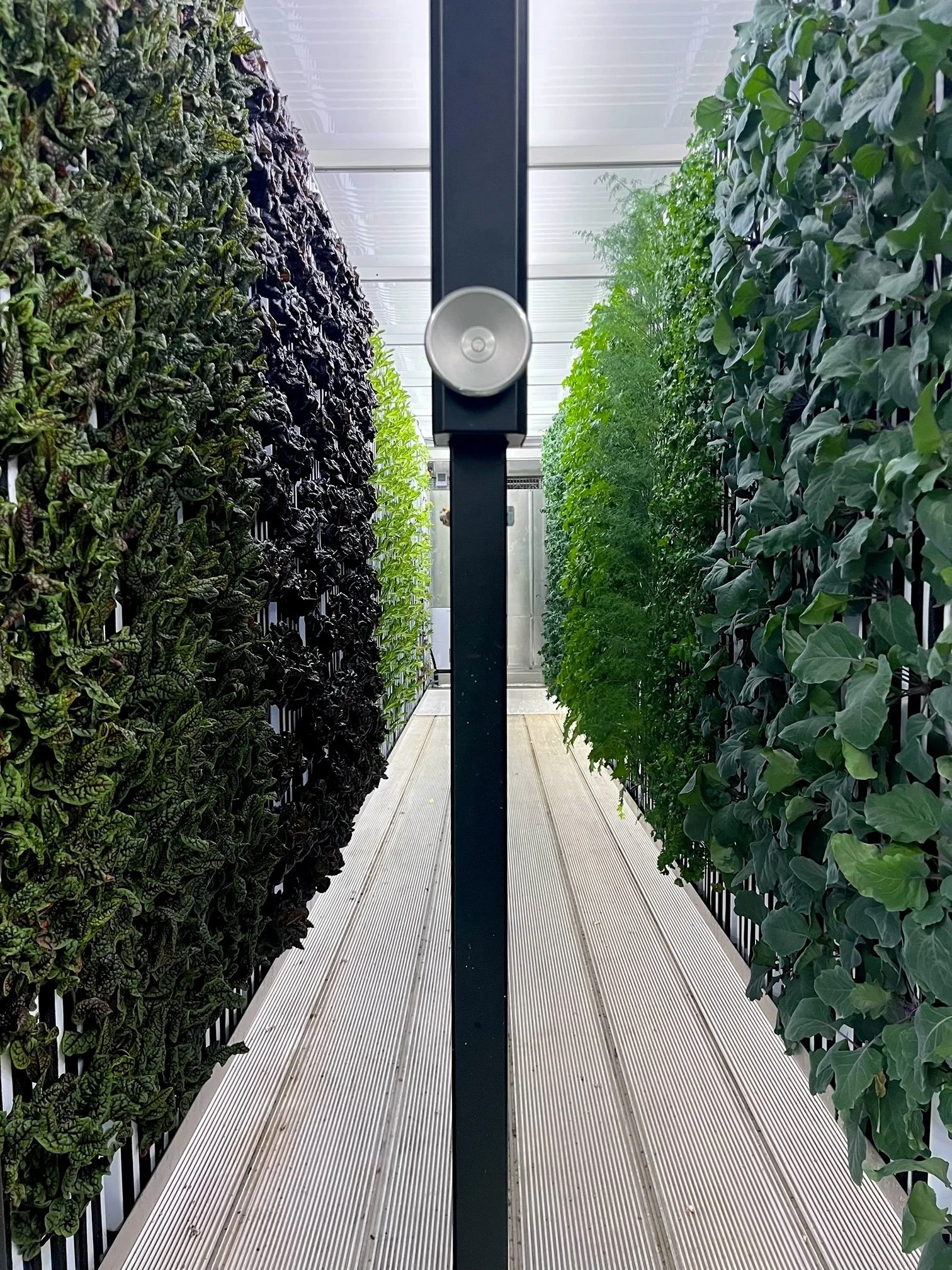
The indoor farm adds a new perspective compared to outdoor gardening.
Riverdale Country is an independent K-12 school set into the rocky, wooded hills of the northwest Bronx. The 6-12 campus serves roughly 785 students, and for the past six years, it has been building a sustainability program from the ground up: curriculum, waste audits, energy tracking, regenerative gardens.
Angela Costanzo started at the school almost 14 years ago as a visual arts teacher before her graduate work in social entrepreneurship and her "inner activist for climate" elevated her into the role of director of environmental stewardship at Riverdale. When the idea of a Freight Farm arrived on campus, it landed with her.
Opportunity: A Campus That Teaches Back
Riverdale already had Hügelkultur gardens on a hillside a one-minute walk from where the Freight Farm now sits. Hügelkultur is a permaculture technique where mounds of decomposing wood, food scraps, and compost form self-watering raised beds that improve over time. The school's director of culinary and Costanzo’s farm-to-table partner, Andrew Bension, was sourcing as much as possible from local vendors, trying to reduce dependence on Hunts Point, the massive distribution hub that feeds most of New York City. The motivation for a vertical farm came from two directions at once: the culinary team wanted hyper-local produce, and the sustainability program wanted a new kind of classroom.
Costanzo's approach to that classroom is deliberately broad. She sees as something that belongs to the entire school. Energy consumption data can fuel a math class. Food access can anchor a social studies conversation. The physical act of growing, harvesting, and eating can connect a student to something larger than any single subject.
"I am constantly and religiously saying that we need to utilize this campus as a living laboratory," Costanzo says.
Plus, the indoor farm offered a new perspective compared to outdoor gardening.
"I've never been this close to roots before, it's fun. You don't see the roots when they're in the ground," Costanzo says.
The Hügelkultur beds sit steps away. Students can stand between both systems and ask the question Costanzo wants them asking: this one uses soil, that one does not, and neither is here to replace the other. Both are part of the picture.
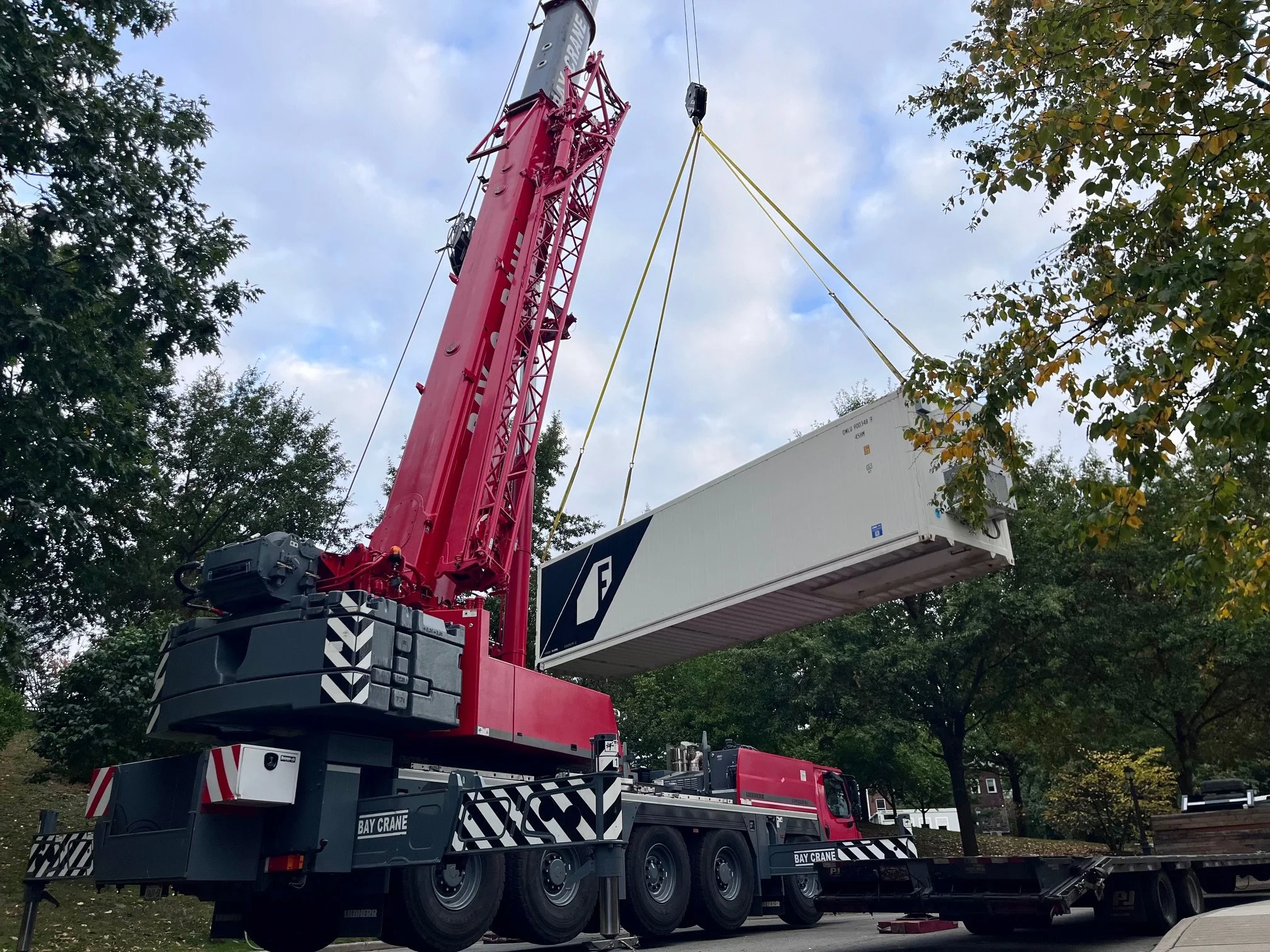
The Freight Farm was delivered to campus in October 2024.
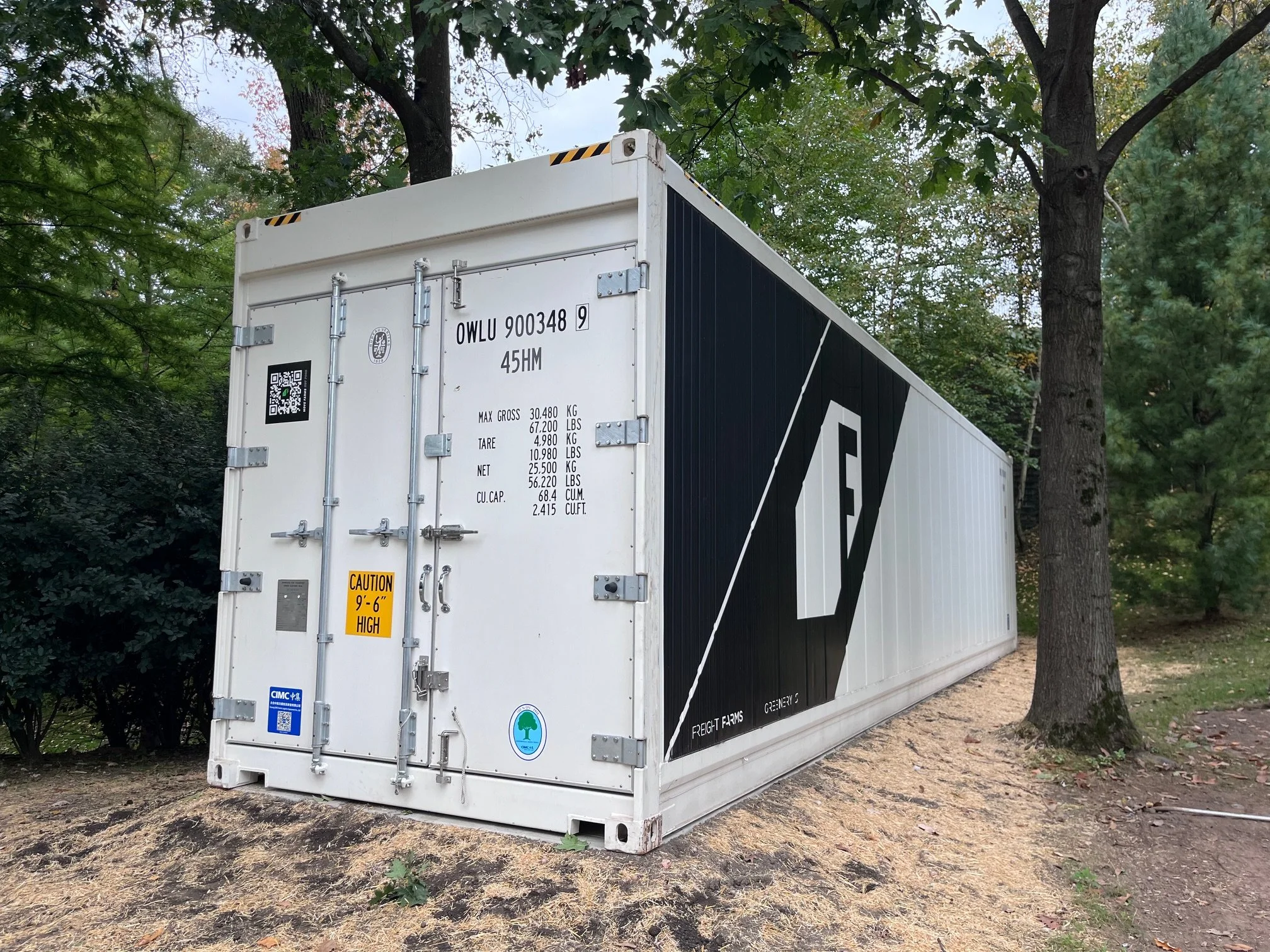
The farm was placed under two mature trees: the canopy provides full shade in summer, reducing the load on the HVAC system.
Solution: Scaling Slowly on Purpose
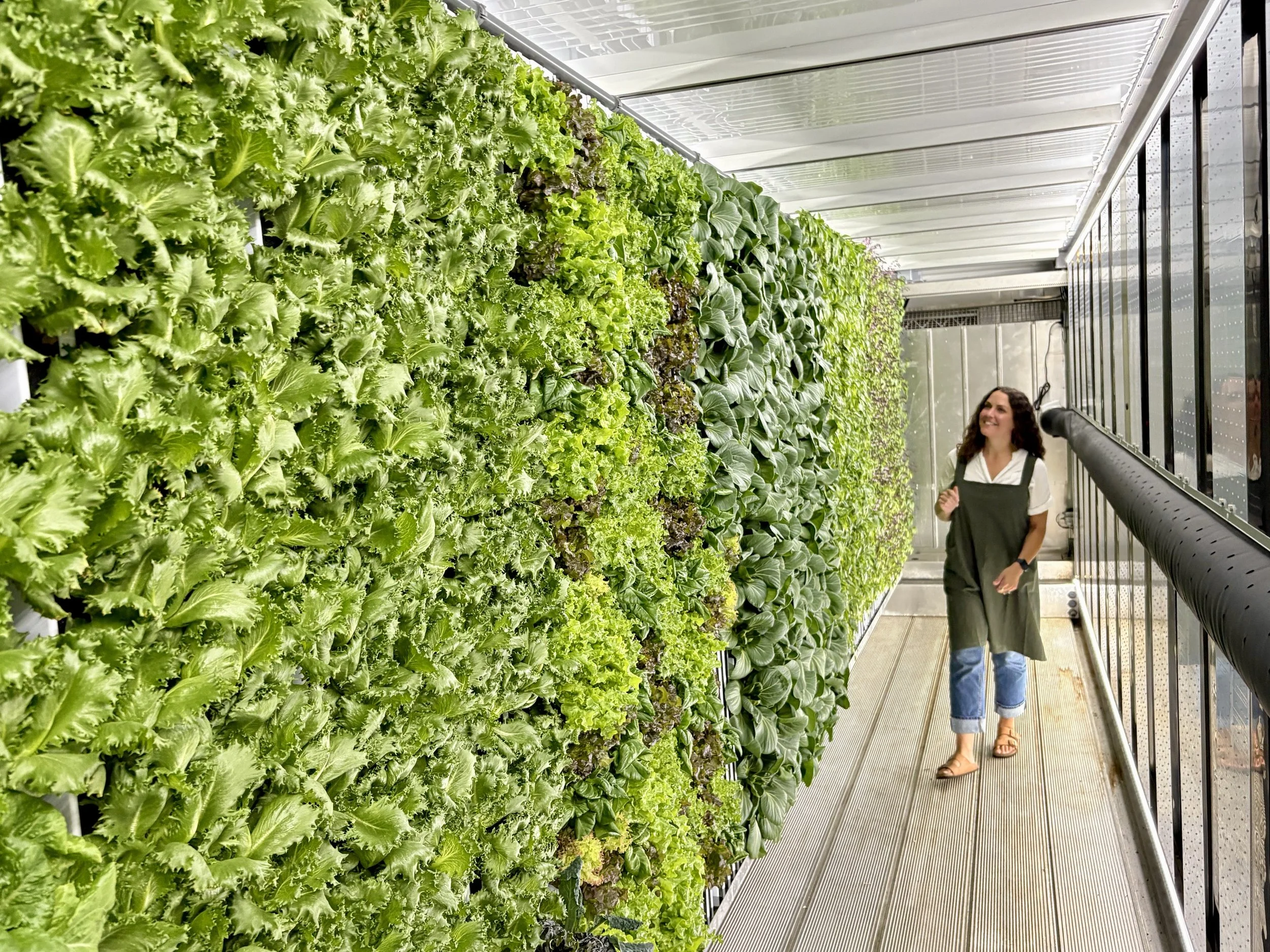
"My approach is not science-based. My approach is more social-emotional agriculture, doing something outside of ourselves.”
The Freight Farm was delivered to campus in October 2024. It was placed under two mature trees: the canopy provides full shade in summer, reducing the load on the HVAC system. Costanzo installed a sub-meter to track the farm's energy consumption independently from the rest of the campus. The school was installing solar panels at the same time, so the full energy picture is still taking shape.
First seeding came in January 2025. Costanzo made a decision early on that she credits with keeping the project sustainable.
"I said that we're not going over 50%, because when the problems happen, I want them to be half as big," Costanzo says.
That advice came from Dave Harris, a former director of crop R&D at Freight Farms who joined the Growcer team after Growcer acquired Freight Farms' assets. When the bankruptcy happened, Costanzo had only had the farm for a few months. The transition to Growcer brought relief and continuity. Dave, now at Growcer, remained a consistent point of contact.
The 50% rule held from October through July. Costanzo wanted to understand what varieties worked, learn the rhythms of the system, and build a foundation before inviting students in. The farm produced roughly 1,000 pounds of produce in that first year. Less than what the Freight Farm is capable of at full capacity, but a number that reflects a deliberate choice, not a limitation.
The project depends on more than one person, and Costanzo is direct about that. The school's facilities team, particularly one member she has known for over a decade, troubleshoots alongside her. She watches him change a pump so she can do it herself next time. He understands that learning, not just fixing, is the point.
The Living Laboratory: Holistic Science Education
“My approach is not science-based. My approach is more social-emotional agriculture, doing something outside of ourselves.”
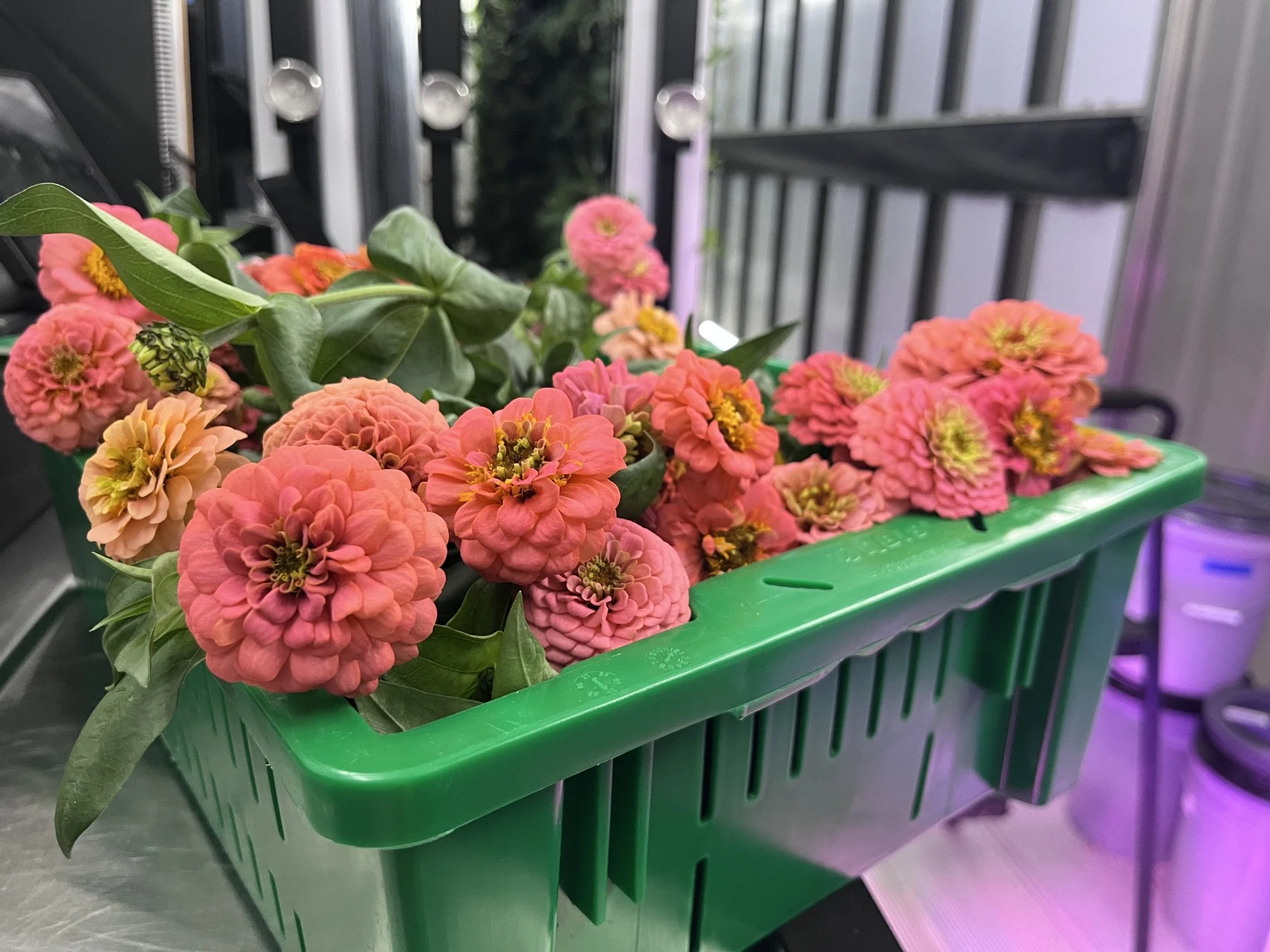
Any classroom teacher can sign up for one of two sessions: a tour and Q&A, or a working visit where students seed, transplant, or harvest.
When educators think about integrating a vertical farm into curriculum, STEM comes to mind first. Biology, chemistry, math. They all fit naturally. Costanzo pushes in a more holistic direction.
"My approach is not science-based. My approach is more social-emotional agriculture, doing something outside of ourselves," Costanzo says.
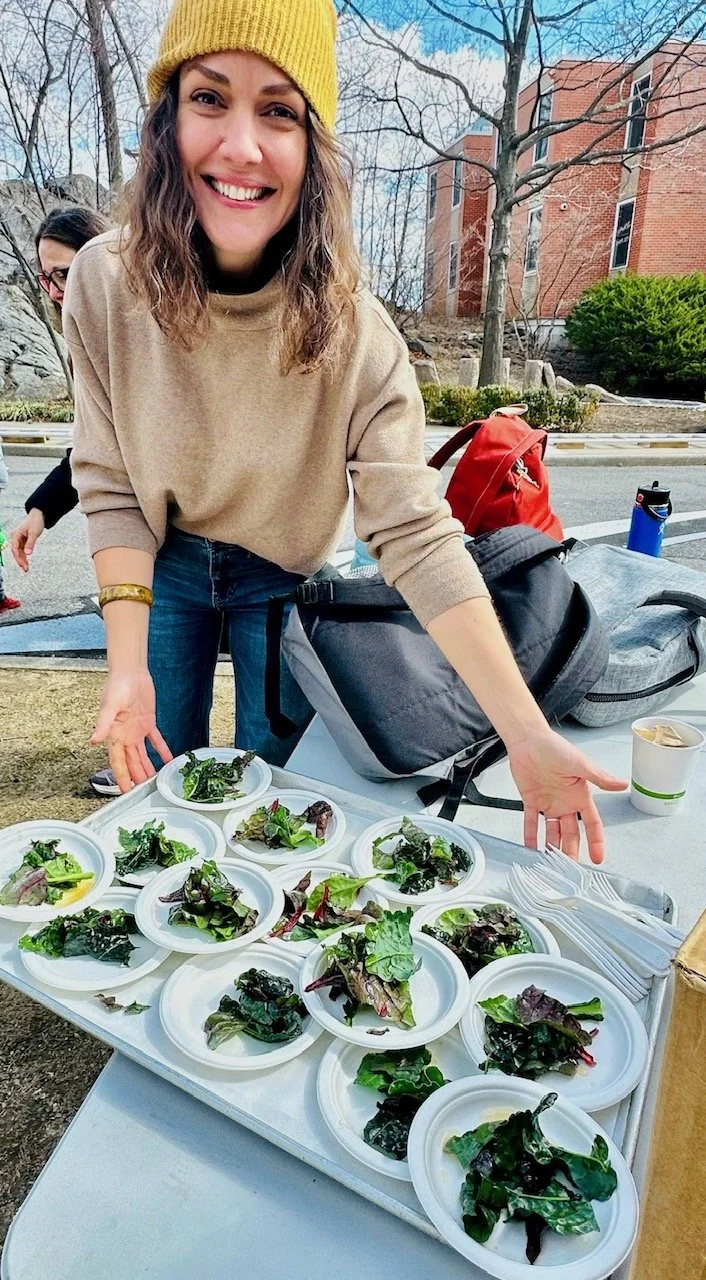
Visitors and parents occasionally take produce home, an Earth Day event sent families off with small CSA-style bundles, but the cafeteria is the primary destination.
That philosophy shapes how the farm shows up across the school. The entry point was a mini-course, a pass/fail elective for students in grades nine through 12 that meets half-time and does not need to belong to any one department. It was the perfect space to pilot something new. Now in its third semester, the course draws about six students each term.
From there, the farm opened to the broader school. Any classroom teacher can sign up for one of two sessions: a tour and Q&A, or a working visit where students seed, transplant, or harvest. The sign-up is open to every department. A Spanish teacher came last semester. A health class has visited. Costanzo adapts each session to the content area and age group. She wants every teacher to feel the farm is theirs.
The summer research internship, run with the school's director of science research, goes deeper. Over two weeks, students investigated what nutrients remain in the farm's wastewater, what ecological impact that runoff carries, and whether cultivating yeast inside the farm could provide CO2 enrichment through off-gassing. A separate two-week operational internship focuses on running the farm day to day and building community partnerships.
One of the most vivid touchpoints is the simplest. Through Riverdale's Homebase advisory program, every sixth grader rotates through the farm for what the director of culinary calls a "forage and cook." Students harvest greens inside the Freight Farm, walk back to the kitchen, and make a meal. Usually pesto, sometimes pasta. All in 50 minutes. With 18 sixth graders.
This year, Costanzo also tapped into the school's "community responsibilities" system. Eight faculty members now rotate through the farm once every eight-day cycle, helping with seeding, transplanting, harvesting, and cleaning. Next year, she plans to restructure: fewer people, longer blocks, deeper work. The goal is to build enough distributed knowledge that a farm tour does not always require her to be present to spread the love.
Community Impact
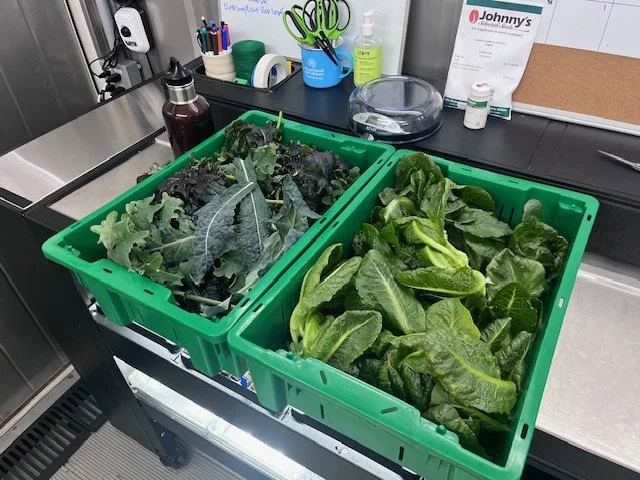
During the academic year, every harvest goes to the school cafeteria.
During the academic year, every harvest goes to the school cafeteria. Costanzo weighs each one to track what the school is no longer purchasing from outside suppliers. Visitors and parents occasionally take produce home, an Earth Day event sent families off with small CSA-style bundles, but the cafeteria is the primary destination.
The moments that matter most, though, do not show up on a scale.
"It's the micro-moments. The micro-moments are the best moments. You see a student in the cafeteria who grew the thing, who transplanted the thing, who harvested the thing, and they see Freight Farm salad greens in the salad bar, and they light up and we make eye contact and I'm like, I know. And they're like, yes, and they put it on their plate. Those are the moments where I'm like, this is why we did it," Costanzo says.
"I don't know how to measure that. It's like that social return on investment that is so hard to quantify. But those moments with the student in the cafeteria are far more important to me than the weight of the produce," Costanzo says.
Over the summer, the farm's purpose shifts outward. Costanzo partners with the Riverdale Neighborhood House, a long-standing community center about a 10-minute walk from campus. They run free weekly distribution days, and the farm's summer harvest goes directly to the neighborhood through that partnership. The school also connects occasionally with the Friendly Fridge network, a mutual aid model born during COVID, where community refrigerators follow a simple rule: give what you can, take what you need.
Looking ahead, Costanzo wants to plan more deliberately around her community partners' calendars, seeding six to eight weeks before a Thanksgiving distribution instead of scrambling when the request comes in. She wants to deepen curriculum integration across more departments. And she wants to keep building a team around the project so it does not live or die with one person.
No matter what Riverdale's students pursue after they graduate, Costanzo believes climate will intersect with their work. The farm is not trying to produce future farmers. It is giving students a lens, a way of thinking about food, systems, community, and their own choices, that they will carry into whatever comes next.
"You don't have to be an expert in it to do it," Costanzo says.
The Freight Farm under the trees in the Bronx is proof of that.
“It’s the micro-moments. The micro-moments are the best moments. You see a student in the cafeteria who grew the thing, who transplanted the thing, who harvested the thing, and they see Freight Farm salad greens in the salad bar, and they light up and we make eye contact and I’m like, I know. And they’re like, yes, and they put it on their plate. Those are the moments where I’m like, this is why we did it.”