
Growing for the whole person: Volunteers of America Upstate New York
Project at a Glance
Launched: November 2023 in Rochester, New York
Goal: Extend VOA's continuum of care to address food insecurity among people experiencing homelessness and housing instability across Monroe County
Distribution: VOA shelters, children's center, and permanent supportive housing sites; weekly produce donations to partner food pantries and nonprofits across Rochester
Impact: 17,752 unique individuals fed with fresh produce; 47 veterans served through an agritherapy program; 82 individuals completed a workforce development certificate program
Operator: One lead farmer with weekly assistance from participants from the workforce development program or technical college partnership
“Every time I bring up, ‘Oh, and we also have a hydroponic farm,’ the reaction I get from people is always like, ‘Oh, really, what’s that?’ And so it creates this excitement that allows us to really kind of talk about how the farm and the produce we grow is integrated into our other programs as we support the whole person.”
Rochester, New York is designated a food-despaired area, with roughly one in four residents living below the poverty line. Volunteers of America (VOA) Upstate New York has served the region for more than a century operating emergency shelters, permanent supportive housing, a children's center, veteran programs, and reentry services across Rochester, Ithaca, and Binghamton.
Volunteers of America Upstate New York pursued a special ARPA grant to build something new on-site: two hydroponic farms, growing fresh produce for clients and community partners across the city. "We are constantly evolving to meet the needs of the community," says Elyse Jones, marketing and community engagement manager at VOA Upstate New York. Housing alone was not enough.
"Everybody still deserves to feel loved. No one deserves to be hungry and be without," says Javonne Jackson with Moving Forward Family Shelter, one of VOA’s partner organizations serving the Rochester community.
“We are constantly evolving to meet the needs of the community.”
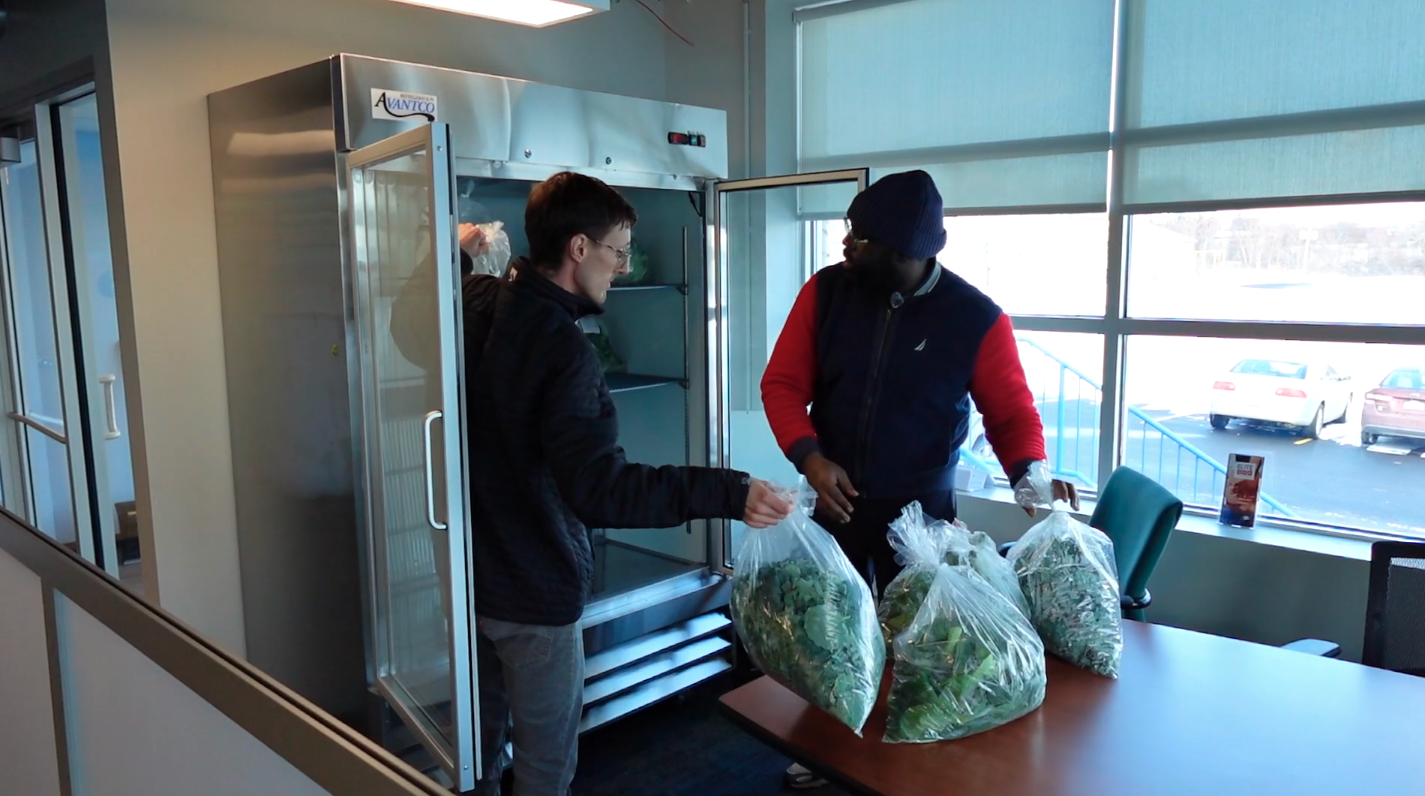
Fresh produce is donated to VOA’s shelter kitchens which cook hot meals for its clients.
Opportunity: Rochester's Food Gap
For people arriving at VOA's shelters, food insecurity was often as immediate as the need for a place to sleep. The organization was already built around a continuum, housing, education, health, but food access was a gap that showed up daily.
Jones describes the organization's mission as providing dignity, hope, and a sense of belonging to people facing challenges. The farm, she says, fits directly into that picture. Securing funding gave VOA the resources to act on-site, under their own roof, and tackle the food insecurity question that sits in the background of clients’ lived experiences.
"The farm really contributes to that whole continuum of care that we have. Housing is such a basic need, but it's not the only need that our clients have. In the Rochester area, in our Ithaca and Binghamton areas, food insecurity is a big issue, and so by providing fresh produce, we're able to not only provide housing and support services, but we're able to help combat the food insecurity as well," Jones says.
“In the Rochester area, in our Ithaca and Binghamton areas, food insecurity is a big issue, and so by providing fresh produce, we’re able to not only provide housing and support services, but we’re able to help combat the food insecurity as well.”
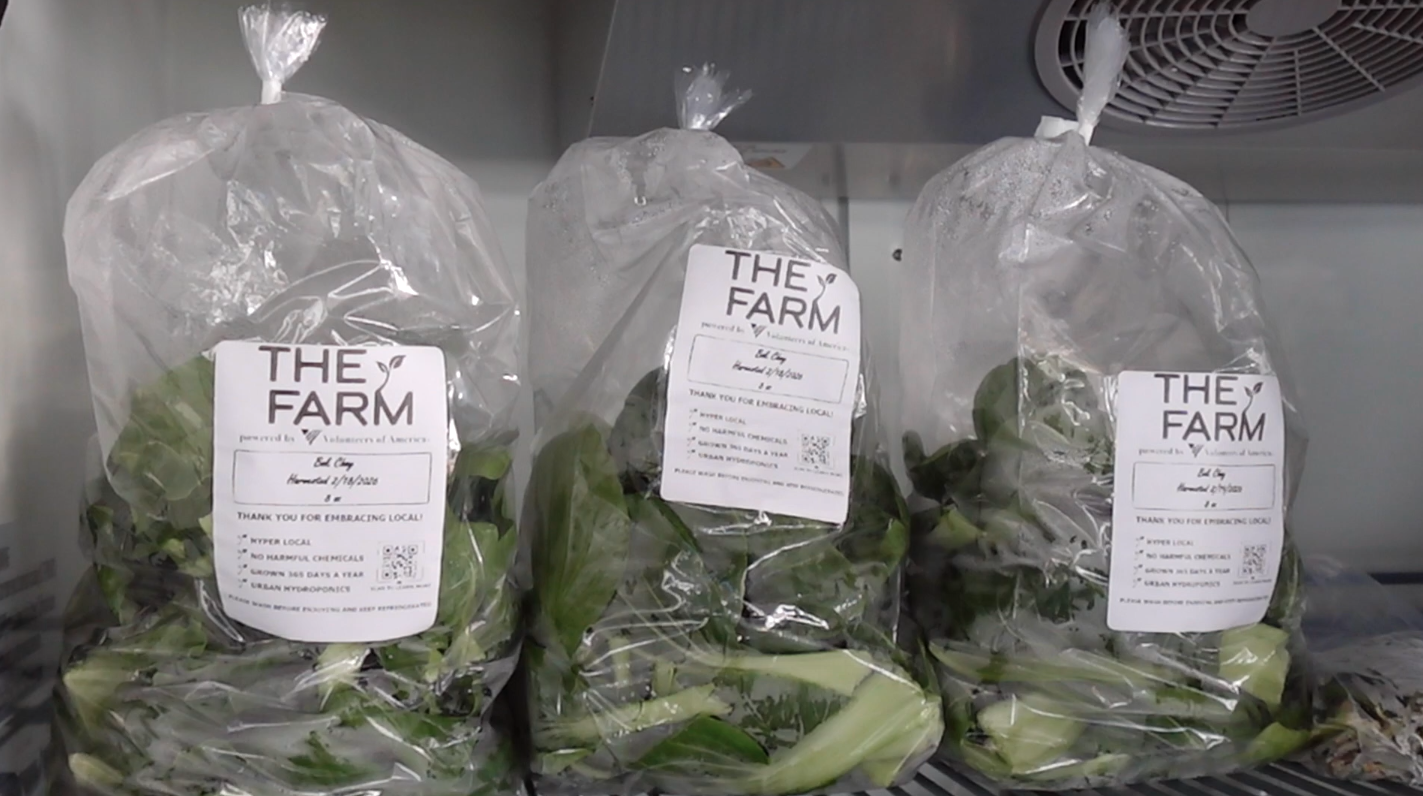
Produce from the farm ready for pick up by one of VOA’s partner shelters.
The reality of that insecurity was visible to partner organizations across the city. Jackson describes what it looks like for the families Moving Forward Family Shelter works to support.
"A lot of times when we get families that come in off the streets and they're facing homelessness, they probably haven't eaten for a few days, sometimes maybe a week or so. We definitely don't want anybody to experience something like that for a prolonged period of time or even at all," Jackson says.
Solution: Two Farms, One Mission
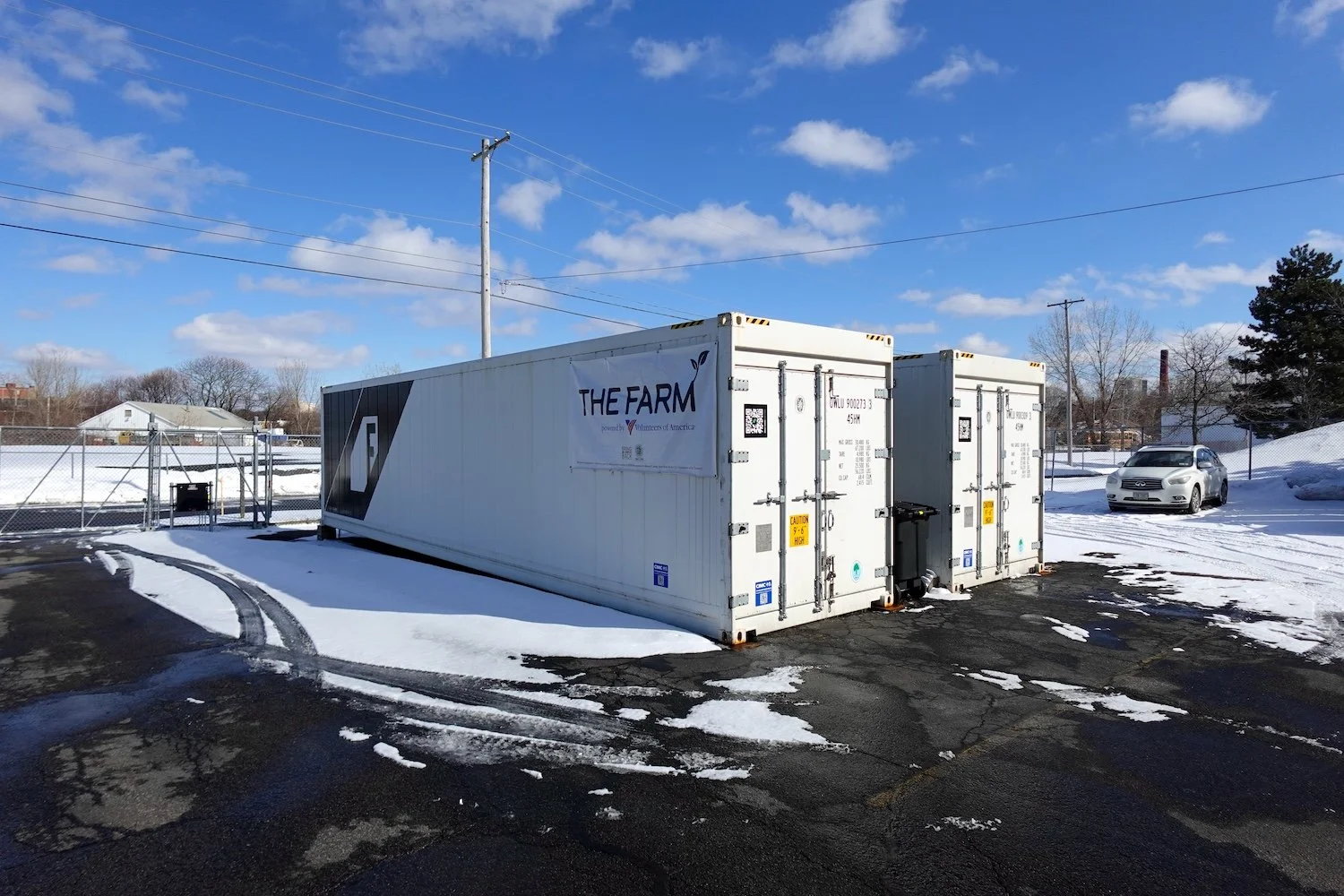
Two vertical farms allow VOA to grow fresh produce on site for direct distribution to their food and shelter programs.
VOA Upstate New York is one of the only affiliates in the national VOA network with a hydroponic farm program.
The two Freight Farms, now powered by Growcer after Growcer's acquisition of Freight Farms in 2025, give organizations like VOA the ability to place a fully operational hydroponic farm on-site with a minimal footprint.
Alec Camp, lead farmer, manages day-to-day operations. The farms grow a wide range of crops: leafy greens, beets, herbs, and green beans that provide a high-protein option for hot shelter meals. Camp tracks what partner organizations and clients actually want to receive, adjusting the crop mix based on their feedback. Most of the harvest goes directly into VOA's own kitchens, reducing food costs across shelter services and the children's center.
"We keep our food costs down due to the growth of the greens that we grow within the hydroponic farm," says Robert Conti, senior vice president of operations.
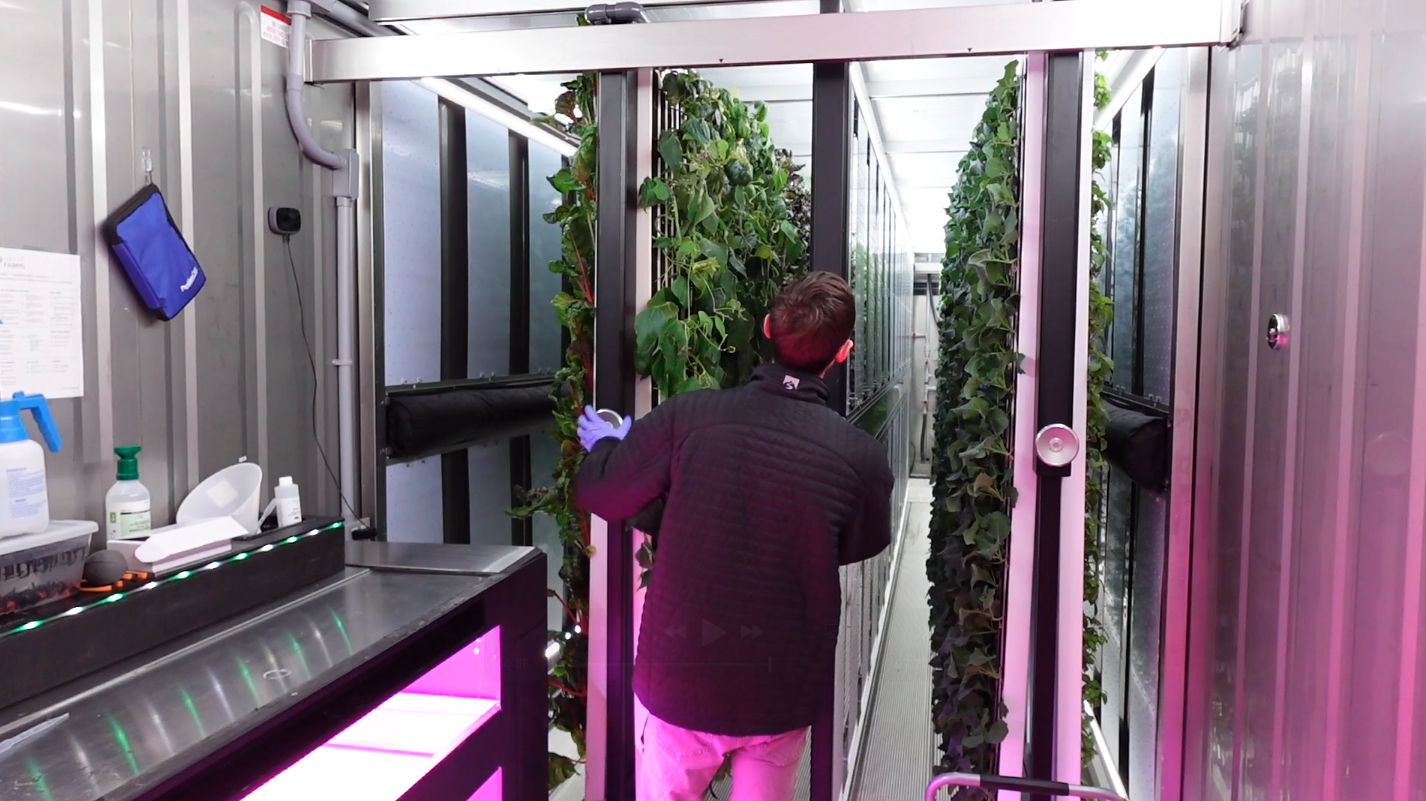
The growing towers can move allowing the operator to have more space to harvest depending on which crops are ready.
For operational support, VOA works directly with the Growcer team and it’s a relationship Camp describes as essential.
"We get support directly from Growcer, and they are kind of a lifeline for us. If I ever have any problems with crops on the farm or with systems that are not working the way that they're supposed to, I have a direct line of communication that I can go to get all my questions answered same day and have all my problems on the farm resolved very quickly," Camp says.
“We get support directly from Growcer, and they are kind of a lifeline for us. If I ever have any problems with crops on the farm or with systems that are not working the way that they’re supposed to, I have a direct line of communication that I can go to get all my questions answered same day and have all my problems on the farm resolved very quickly.”
The farms produce in quantity. Camp's most reliable crop has taken on a life of its own.
"Our bok choy is definitely our most productive green by far. I can't stop growing bok choy. I wish we had less of it sometimes. It just is incredibly productive," Camp says.
Growing Futures: Workforce, Healing, and Community Education
The farms do more than grow food. VOA built programming around them from the start designed to develop skills, create pathways, and bring more people into the work of growing.
A four-to-six week workforce development program gives participants hands-on training in farm operations, culminating in a certificate of completion. To date, 82 individuals have completed the program. A current community partner, Rochester Rehab, places one person on-site weekly to help with harvesting, pruning, and sanitation. Camp is the only full-time employee and this reflects the number of organizations willing to get involved.
Youth education has become a consistent part of the farm's rhythm. VOA partners with Edison Career and Technology High School, a local career technical school, to welcome career-focused students. The farm offers something concrete: hands-on exposure to HVAC, irrigation, crop management, and farm operations.
"The kids love coming onto the farm. They love getting involved, growing vegetables, seeing where their food comes from. The teachers love it, too. It's really a great time for everybody," Camp says.
“The kids love coming onto the farm. They love getting involved, growing vegetables, seeing where their food comes from. The teachers love it, too. It’s really a great time for everybody.”
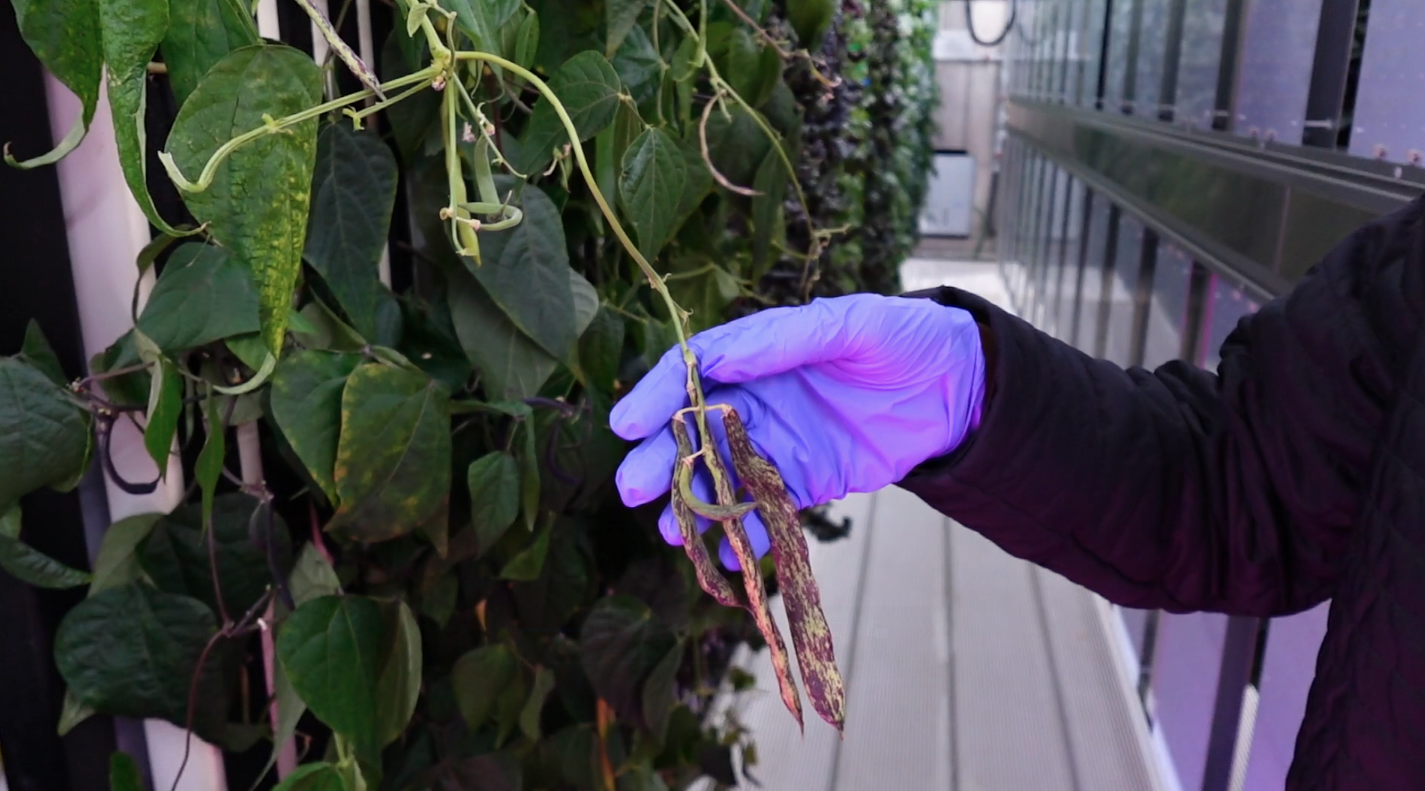
VOA is growing green beans because they are a good source of protein and can be used to make a hot meal.
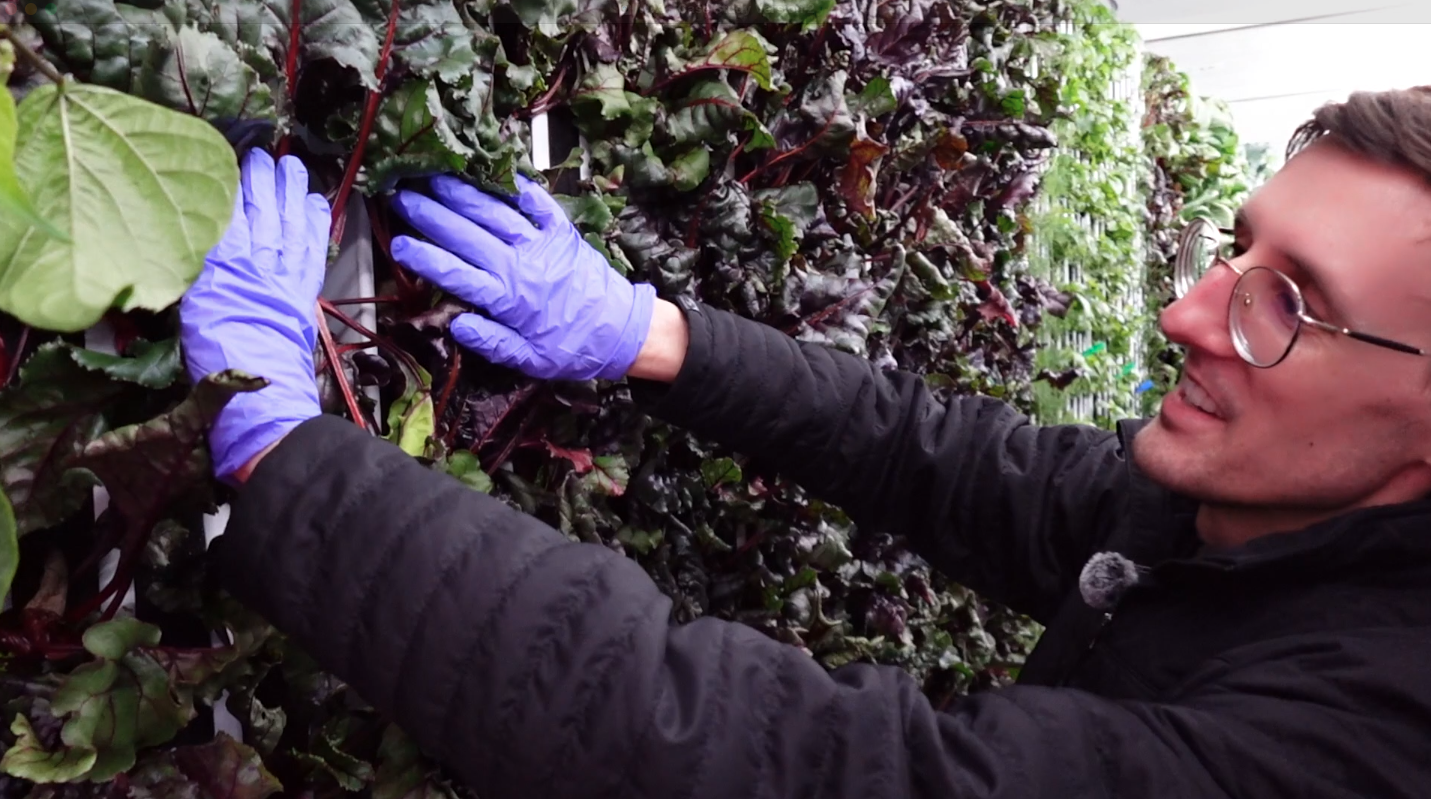
The leaves and stems of beets go great in stews for an added nutritional punch.
For veterans, VOA launched an agritherapy program offering hands-on planting and harvesting in a calm, structured environment for veterans managing PTSD. The program has seen 47 veterans participate to date. The program is currently on pause, but VOA sees it as a meaningful part of what the farm can provide and hopes to bring it back.
Camp's vision for the farm extends further. He wants to see more of the growing eventually managed by the people VOA serves: clients, community members, and partner organizations.
"It helps get the people in our community involved in the farm, and it helps build skills, which I think is a crucial mission of what we're trying to do here on the farm, to get the community involved and to learn how to farm and where our food actually comes from," Camp says.
Community Impact
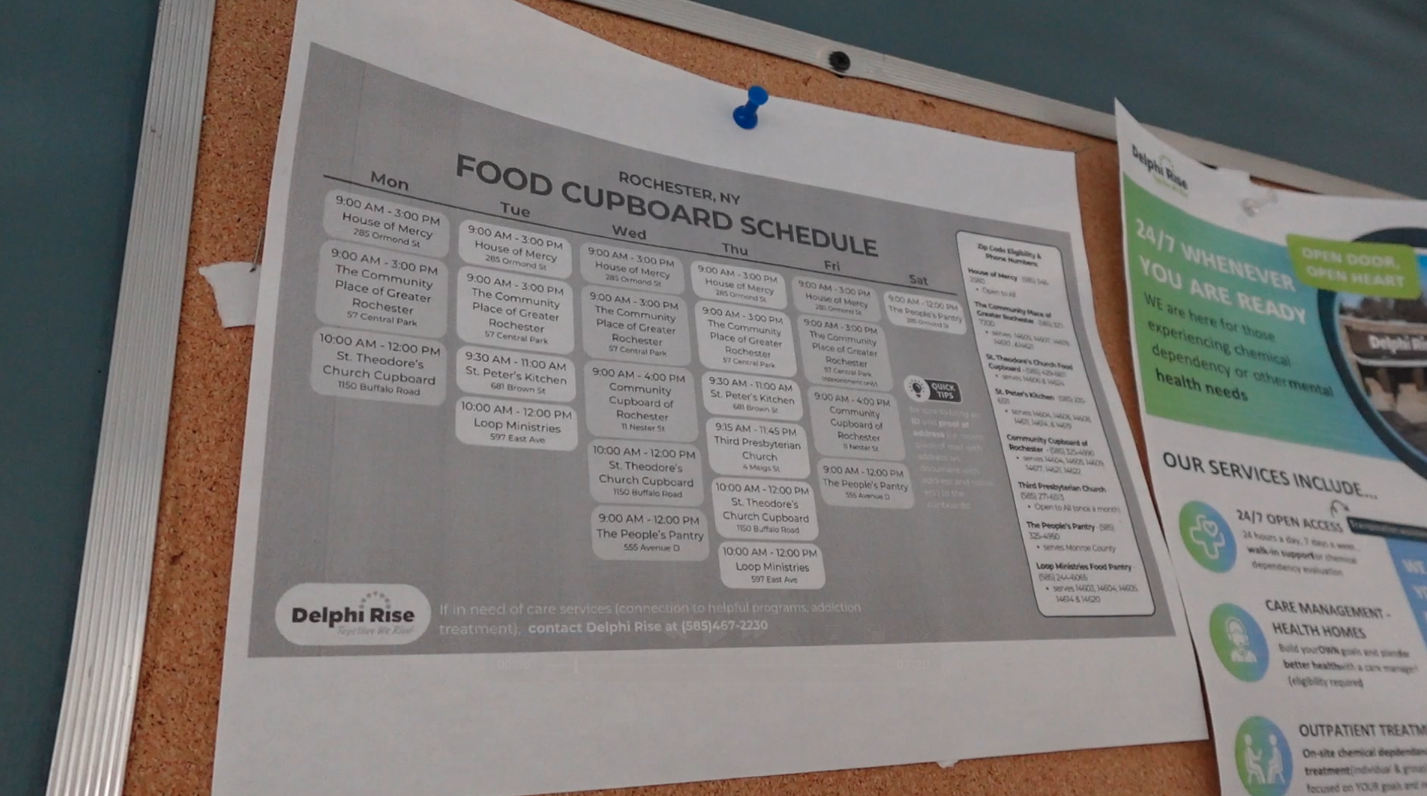
On a weekly basis, fresh produce goes out to food pantries, food cupboards, shelters, and permanent supportive housing sites across Rochester.
The farms produce enough to reach well beyond VOA's own headquarters. On a weekly basis, fresh produce goes out to food pantries, food cupboards, shelters, and permanent supportive housing sites across Rochester. Partner organizations have come to look forward to the deliveries. At VOA's Children's Center, families pick up produce on Friday afternoons — parents signing their names, taking what they need.
When Jones talks about VOA publicly, the farm tends to stop people.
"Every time I bring up, 'Oh, and we also have a hydroponic farm,' the reaction I get from people is always like, 'Oh, really, what's that?' And so it creates this excitement that allows us to really kind of talk about how the farm and the produce we grow is integrated into our other programs as we support the whole person. It is just like one program that we do, but it's something that the community really seems to be the most interested in, and kind of also allows us to lead into talking about some of the other programs we do, like our housing and our Children's Center and our re-entry programs," Jones says.
For a 130-year-old organization, the farm has become an unexpected entry point. Innovation draws curiosity and curiosity opens doors to the rest of the work.
Pandora Brinkley, director of the children's center, sees the effect at a quieter scale. Children who come through the center have started paying attention to what they eat.
"For me and for the center, I think it's a good way to help our families and our children stay healthy. We're always trying to find ways for them to have better snacks and also do well and stay healthy at home and just in general. So having the fresh produce here is a good way to segue into that staying healthy. Generally, when the children are there, they'll come through, they like the lettuce and stuff like that. They'll say, 'Oh, I had lettuce last night,' or 'I had lettuce on a sandwich.' That's mostly what most of the kids say about eating the fresh produce here," Brinkley says.
VOA recently opened its second container. The ability to help more people is still growing and so is what they know about how to do it.
“For me and for the Children’s Center, I think it’s a good way to help our families and our children stay healthy. We’re always trying to find ways for them to have better snacks and also do well and stay healthy at home and just in general. So having the fresh produce here is a good way to segue into that staying healthy. ”