
From Mega Farm to Modular: What a Veteran Vertical Farmer Wants the Industry to Know
Meet the grower
Alec Camp's path into vertical farming started where many great agricultural stories do: a college environmental studies class. From there, he spent years getting his hands dirty across all kinds of farms: a CSA vegetable operation, an iris flower farm, a goat dairy. He eventually landed at one of the most heavily funded commercial vertical farms in the country, where he worked his way up from quality assurance technician to grower. Today, Alec manages the Freight Farm at Volunteers of America in Rochester, New York, a nonprofit homeless aid organization where 100% of the produce grown is donated to shelter residents and community partners.
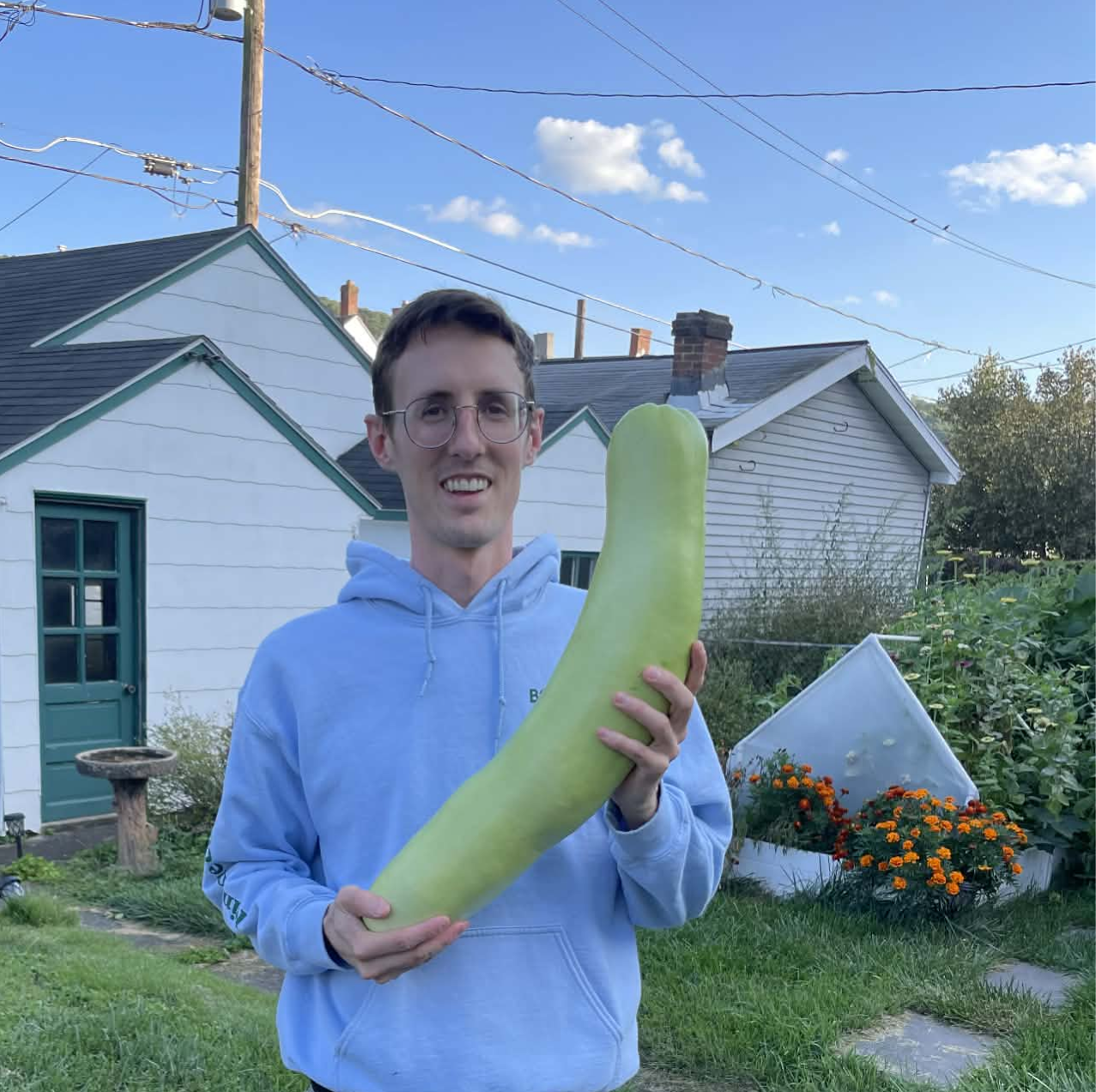
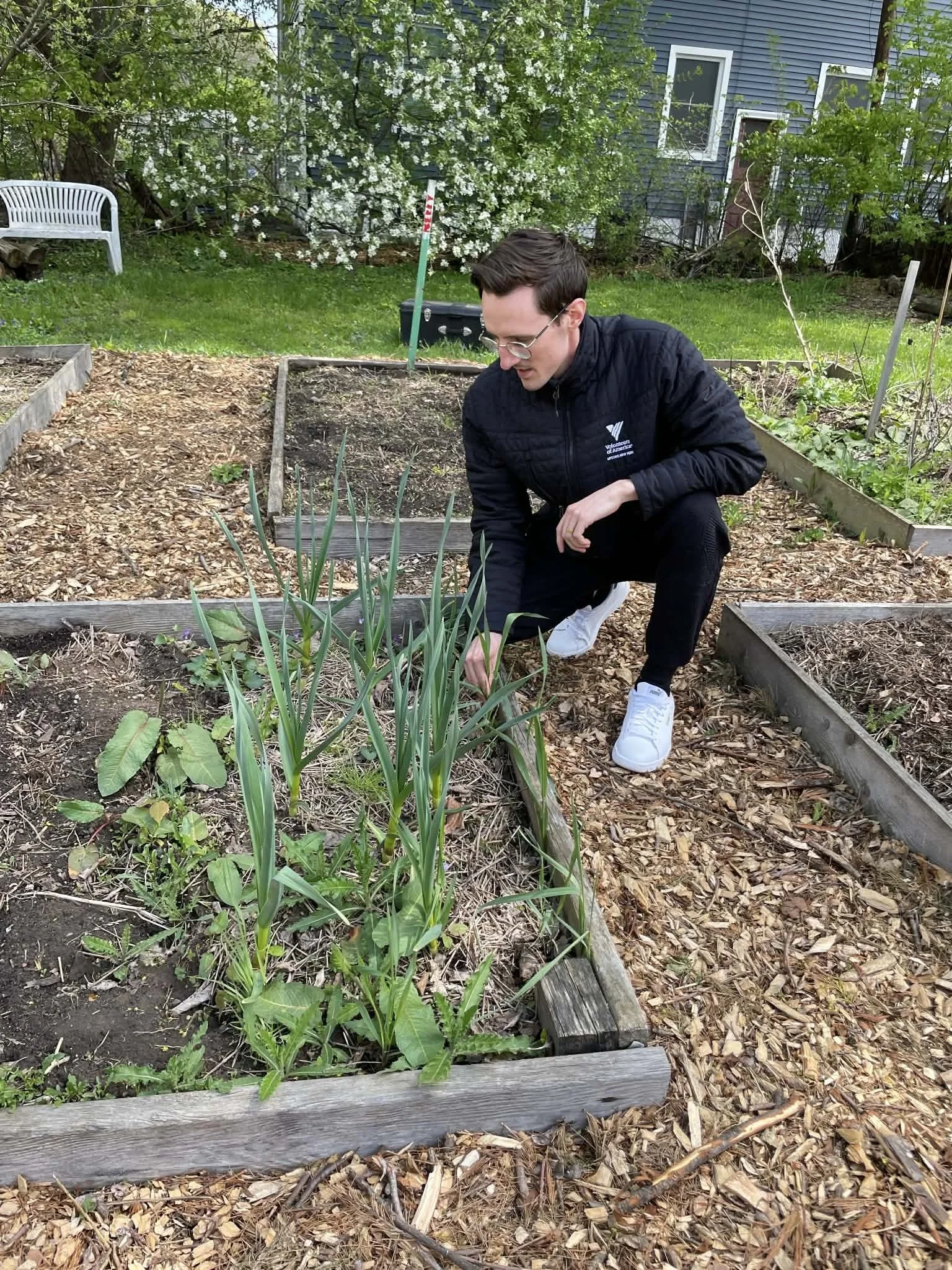
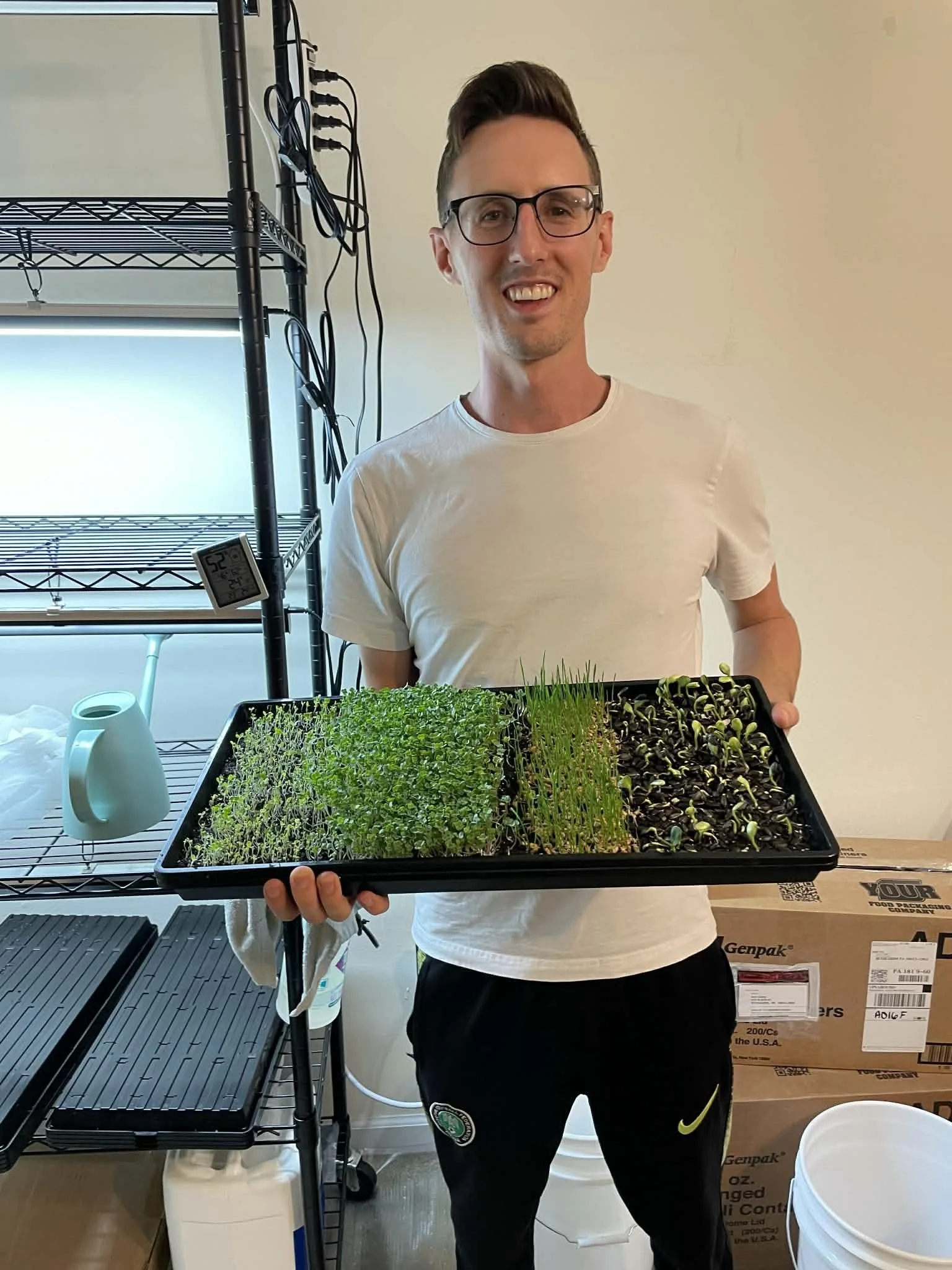
Pictured (left to right): Alec Camp with a bottle gourd, garden, and seedlings.
Why this matters
How often do you actually get to hear from someone who has worked at one of the biggest, most funded vertical farms in the country AND runs a small modular container farm? That's basically the whole spectrum of this industry in one person. Alec's take on what works, what doesn't, and where things are heading is exactly the kind of perspective we don't get enough of.
“As for whether these failures act as a deterrent: people should take them as lessons, not reasons to stop. There’s been plenty of failure in this industry so far, and as long as we take away new lessons from it, we can make this industry work. There’s a lot of potential: healthy foods, better access to fresh produce, maybe better pharmaceuticals down the line. I don’t want these failures to deter progress. I want them to drive better decision-making.”
Top Takeaways
Prevention beats intervention. Clean your filters, manage pest pressure early, keep your systems running consistently. Unglamorous advice that outweighs any fancy upgrade.
The industry is maturing, not dying. The boom-bust cycle is painful but necessary. The farms finding their footing are focused on high-margin specialty crops, renewable energy, and modular systems that can adapt quickly when things go wrong.
Modular beats monolithic. Smaller, modular setups are easier to isolate, troubleshoot, and fix. Complexity is not a feature.
Information hoarding is holding the industry back. The real competitive advantage is in hands-on support and execution, not keeping your troubleshooting tips secret.
Q&A
Q: What excites you most about vertical farming?
Alec: Definitely the ability to save space and water. The fact that we're able to grow as many leafy greens as we do just out in our parking lot is huge. I don't have to drive to nice farmland to be able to farm. I can just do it right there, which is amazing.
The water savings are also significant. We're recycling our water as much as we possibly can, and it makes a huge difference. Coming from a CSA farm where all our irrigation was either overhead or drip, you're spraying however much water you can to irrigate the crops, and a lot of that just goes to waste. Drip irrigation is more efficient since it goes directly to the root zone, but even compared to that, hydroponics is way more efficient. We're able to keep recycling the water with hardly any water loss. Sometimes it can even be water positive, drawing moisture out of the air and giving it to the plants.
Q: How does your past experience at a large commercial vertical farm compare to your experience running a Freight Farm?
Alec: The large-scale farm was the most heavily invested vertical farm in the nation at the time. We were growing tens of thousands of pounds of produce per month across three different farms, with some of the most innovative hydroponic systems you can imagine, teams of engineers and scientists, and a huge focus on building a successful for-profit business and expanding to more locations.
Here, we're very small in comparison. We're growing about 150 pounds per month, maxing out at 300 to 400 if we're as efficient as we can be. We operate through Volunteers of America, a homeless aid organization, and 100% of our produce is donated. We want to provide fresh, nutritious produce to clients at the homeless shelters and surrounding neighborhood organizations, because there's often not enough access to these foods, especially during the winter in Rochester where it's not easy to grow anything outside.
We also measure our impact beyond just the number of people served. We run a workforce development program, agritherapy, and education programs through our children's center and partnerships with local career technical schools. We're able to do a lot more than just grow produce, which is fantastic.
In terms of the systems themselves, there's actually a good amount of overlap. At the large farm, we used horizontal NFT trays stacked up to three floors, about 3,000 trays of crops going at any time. Here we use a vertical wick system. There's a lot of overlap in how they perform for the crops. Where things differ is what we're growing: I grow beans, radishes, things we wouldn't have grown commercially, just to round out what we can offer the shelters and partners. But that's driven by the mission, not the technology.
Q: At the large farm you had entire teams of engineers and scientists. How specialized was your role there compared to what you do now?
Alec: You get a lot more specialized the larger you grow. My job as grower was focused on crop health and day-to-day operations, making sure nutrients were stocked up, stock tanks were full, pumps were working properly, and reporting on disease pressure. But we also had specialized teams asking, okay, how do we engineer a solution to this problem? Scientists working solely on understanding disease pressure better. A lot of dynamic roles.
Here, I'm doing as much as I can by myself, a lot of different things. Thankfully we don't have a lot of the same problems that large-scale farms tend to have, but you're definitely juggling a lot of small things here and there.
Q: Can you expand on that? What kinds of problems do large-scale farms run into that smaller systems don't?
Alec: With more advanced systems, there are more things that can go wrong. The automatic back-flushing filters at the large farm were supposed to be a huge time-saving piece of equipment, but we ran into problems with them constantly. The number of times you have to take those things apart, clean them, repair them, put them back together is a massive time sink. Here, we just have basic inline filters. Clean them every other day and they're good to go.
But the big one was disease pressure. With huge, heavily integrated systems, they become enormously complex, and it was really hard to pinpoint exactly where the disease was harboring and spreading from. We struggled with that for the last year and a half of operations there. We did everything we could: full chemical cleanouts of the irrigation system, shutting down systems entirely and starting over, and eventually we started scrapping the old irrigation system and building new ones so we could have better control over cleaning cycles and a better understanding of what was going on.
Q: Modular vertical farms are often described as turnkey and plug-and-play. From your experience on both ends of the spectrum, how easy is it for someone to be trained to grow using a system like this?
Alec: It definitely depends on the scale. Things can get super complicated if you let them. But for the most part, the Freight Farm system is pretty plug-and-play. The systems aren't that complicated, and basic training on how to operate the system and manage the day-to-day is very learnable, very teachable. Growcer's farm camp training is fantastic. It covers all the questions you'd have about how these systems work and how to manage the farm.
That said, hydroponics is inherently an industry with a lot of troubleshooting. Things go wrong all the time, large scale or small scale: pumps failing, pest pressure, disease pressure. You're going to have problems come up. The biggest thing is having access to good support. Growcer's support has been fantastic for that, anything from "what replacement probe do I need?" to "I have a heavy aphid infestation, how do I handle this?"
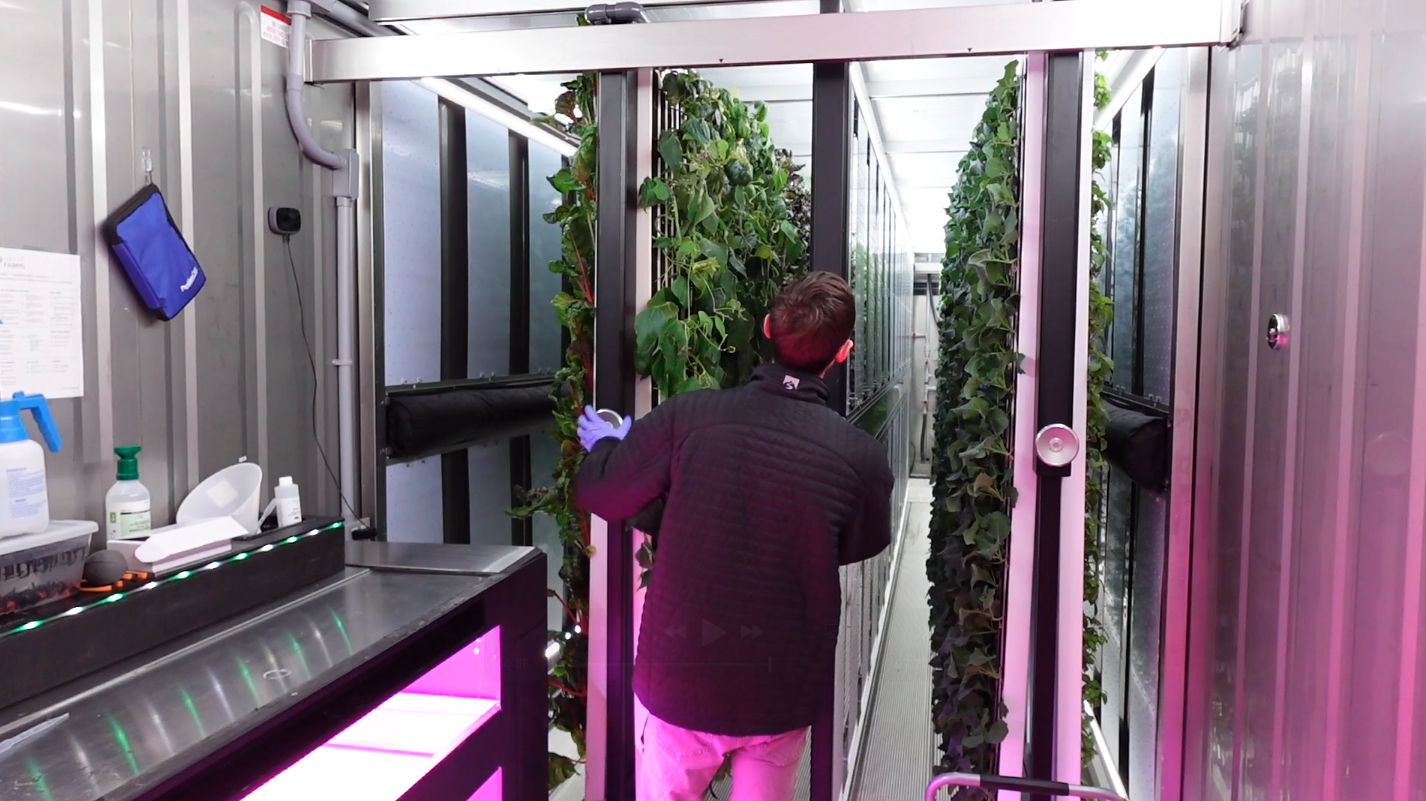
Just like farming, hydroponics is inherently an industry with a lot of troubleshooting, Alec says.
Q: What are the most common misconceptions you see about vertical farming and indoor growing?
Alec: The biggest one is that vertical farming is going to replace conventional farming for crops like lettuce, wheat, corn, and soy. That's just not true. Vertical farming is one tool we have to leverage to address gaps in our food systems. There are a lot of crops we're entirely dependent on that just don't make sense to grow vertically. Wheat, corn, and soy make way more economic sense to grow out in a big field. And even for lettuce, we're struggling as an industry to make it super viable in these vertical systems. I think the industry is gearing more toward high-margin crops like berries and microgreens, things you can turn more of a profit on compared to lettuce, which has very cheap alternatives in conventional farming.
Take corn as a simple example. It grows best when you grow a lot of it all at once, and to do that you need a lot of space. The amount of growing space you would need to produce a competitive amount of indoor-grown corn compared to conventional production in the U.S. is just insane. Potatoes are similar: they grow best in the ground because they need a certain kind of pressure and very specific conditions that soil naturally provides. You'd have to do a lot of engineering to replicate what soil just does naturally. The planet has given us all the tools we need. We don't need to engineer everything.
Another misconception is that vertical farming always means GMO or unnatural crops. We don't use any GMO seeds. It's actually very uncommon in small-scale farming like this. And you can totally power these Freight Farm systems with entirely natural fertilizers if you want. I personally use synthetic fertilizers because it's easier, keeps the system cleaner, and gives me more control over the nutrient profile and microbial ecology. But you can absolutely do everything 100% natural and organic if you'd like.
Q: Does location play a role in determining which crops actually make sense to grow vertically?
Alec: Location is huge when it comes to determining what crops are suitable for a vertical farm. Lettuce might make economic sense to grow in one region, but if you can grow it year-round outdoors nearby, it probably doesn't make sense to grow it intensively in a vertical system there. Arid regions are different: they can't grow a lot of crops without using a ton of water, so if water access is a big concern, vertical farming makes a lot of sense. Urban areas too. If there's no farmland nearby and fresh produce is in demand, that's a niche vertical farming can absolutely fill.
Q: What's your best operator tip?
Alec: Focus on prevention. If you can prevent a problem, it's way easier than fixing it. You're going to run into issues with pests, with irrigation, with HVAC, with different systems on your farm. Keep them running well and they'll serve you for a long time. Try to prevent any pest problems. Clean your filters regularly. Keep your farm nice and clean, and it will save you so much headache and so much time in the long run.
Maintenance. Maintenance. Maintenance.
Proper maintenance of your modular farm will impact your yields the most.
Q: What do you think about the boom and bust cycles our industry has gone through? And is there still a place for vertical farming in the future of agriculture?
Alec: Vertical farming is a pretty new industry. The boom was roughly 2019 to 2022, a lot of venture capitalist funding going into mega farms producing super high volumes of lettuce. The bust has been 2023 to now, with a lot of high-profile bankruptcies from massive farms due to unsustainable energy costs, too-high capital expenditure, and intense pressure from conventional agriculture.
During the boom, working at the large farm, we all thought it was going to be the next big thing. The excitement was that this was going to be how lettuce was grown from now on. We were considering building more farms in different states. And then 2023 hit, we started seeing those bankruptcies, big problems on our own farm, rounds of layoffs. It definitely made people scared.
But I think this boom-bust cycle is more about us maturing as an industry. It's a painful process: lots of people losing jobs, lots of businesses going under. But I think we are starting to find the niche for vertical farming within agriculture. In the future I see more specialization on high-margin crops, more utilization of these farms in arid and urban areas where it makes more sense to grow vertically, a shift toward renewable energy, and a lot more modular systems that can adapt to problems faster compared to heavily integrated large systems.
As for whether these failures act as a deterrent: people should take them as lessons, not reasons to stop. There's been plenty of failure in this industry so far, and as long as we take away new lessons from it, we can make this industry work. There's a lot of potential: healthy foods, better access to fresh produce, maybe better pharmaceuticals down the line. I don't want these failures to deter progress. I want them to drive better decision-making.
Q: Is there anything you'd like to add that we haven't touched on?
Alec: I'd say the industry has not been doing a great job of sharing information. A lot of it is locked behind NDAs and profit-driven motives, and that's really unfortunate because it's holding us back on progress. I want to be able to share as much information as I can with fellow growers. That's how we're going to improve our practices, grow better crops, and help each other out. I don't want this industry to be fully competition-based. We're struggling with very similar problems while trying to do very different things with our farms, and I want us to come together and figure out the best way we can use this technology to further our missions, whatever they may be.