
A Sustainable Supply of Fresh Greens: The Ottawa Mission
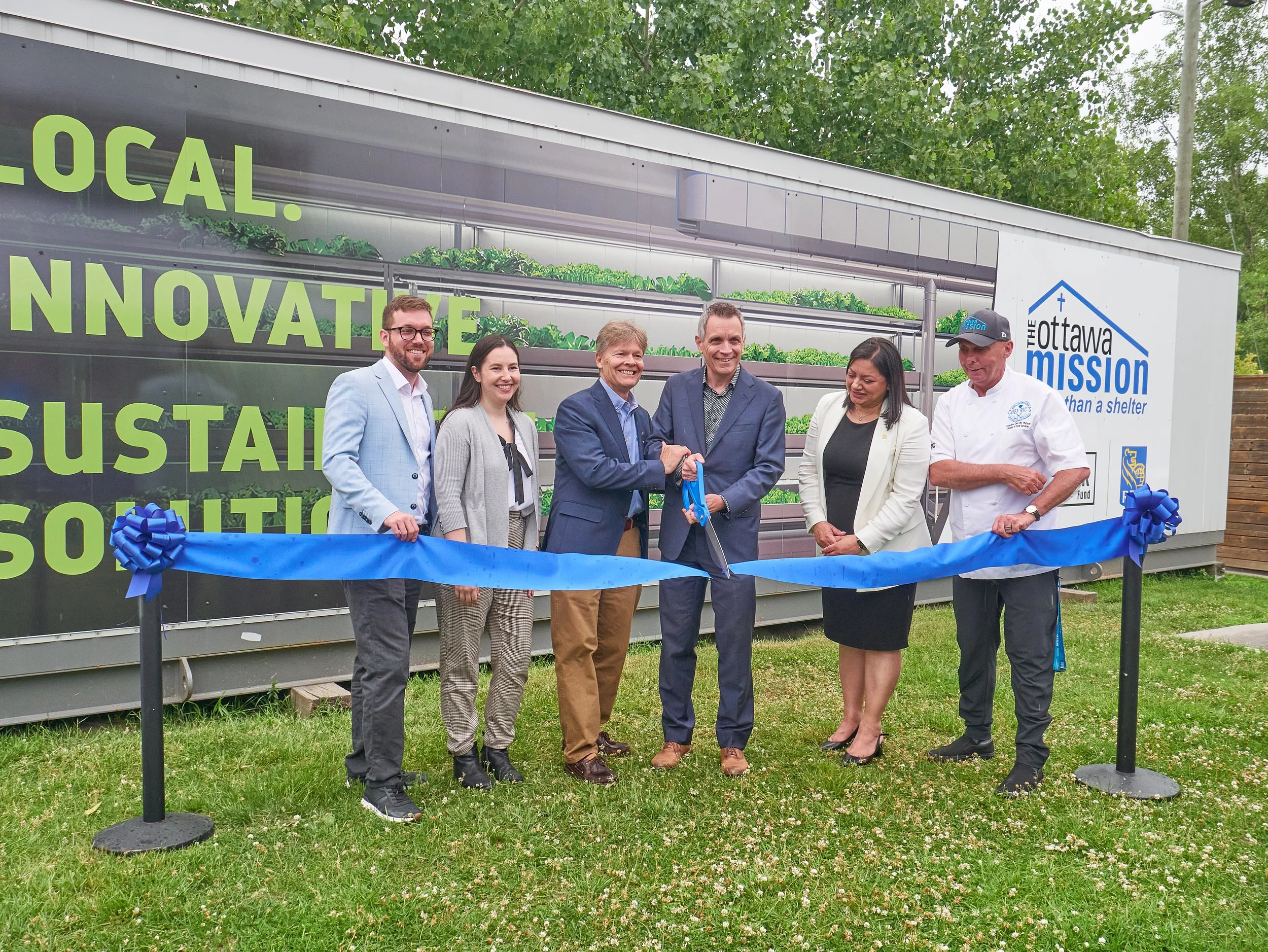
From left to right, Corey Ellis, CEO and co-founder of Growcer, Alida Burke, CFO and co-founder of Growcer, Peter Tilley, CEO of The Ottawa Mission, Ottawa Mayor Mark Sutcliffe, Devinder Gill, RBC’s Regional President for Ontario North and East, and Chef Ric Allen-Watson, The Ottawa Mission’s Director of Food Services.
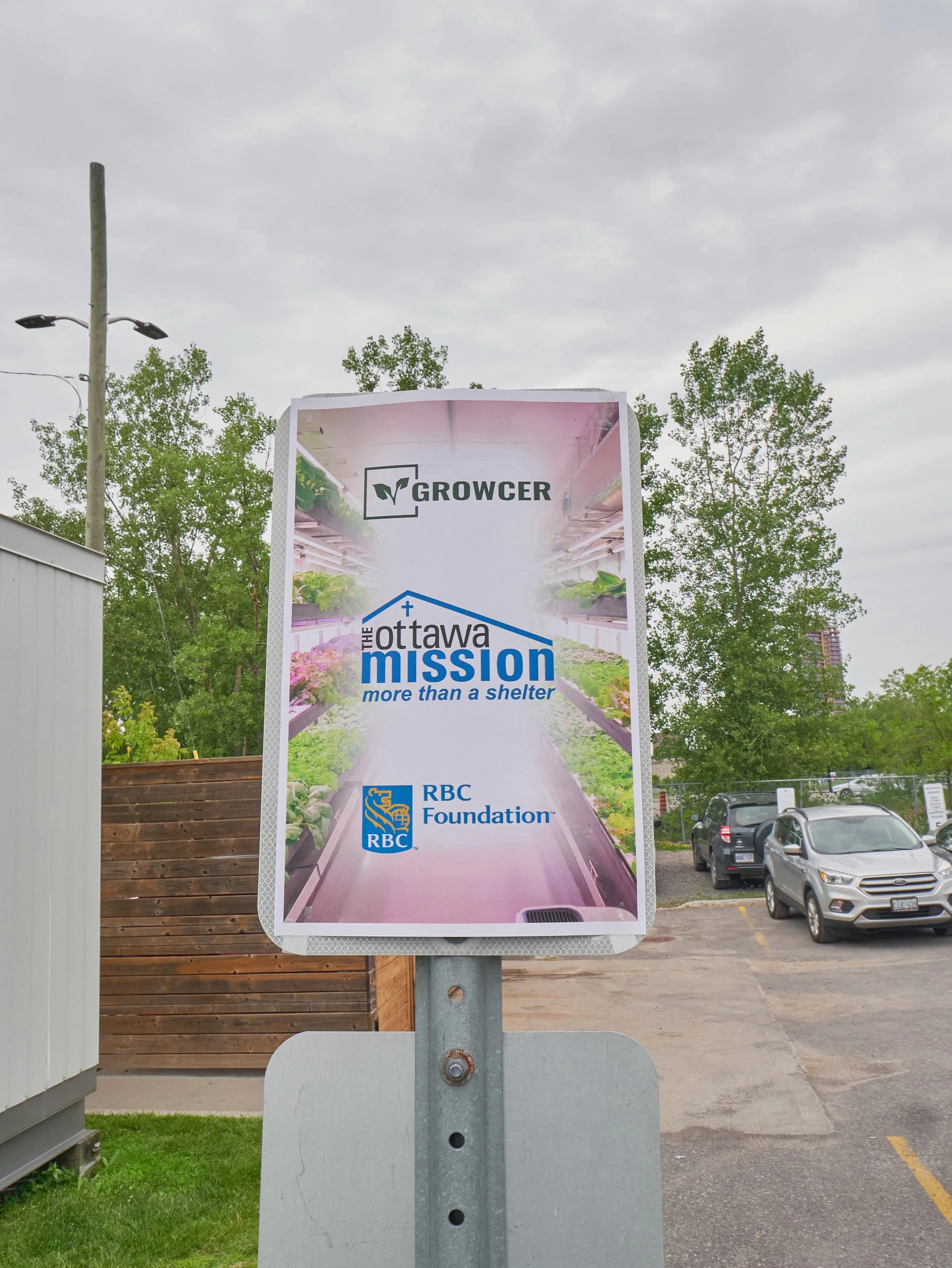
Project at a Glance
Launched: June 2025, Ottawa, Ontario
Goal: Replace an unreliable mix of donated produce with a consistent, high-quality supply of fresh greens for the Mission's meal programs, year-round
Distribution: The community kitchen (nearly 2,000 meals a day) and the food truck program (two trucks, 43 stops, over 14,000 meals a week)
Impact: Two vertical farms growing up to 20,000 lbs of fresh greens a year, feeding directly into existing programs and drawing new public attention to the Mission's work
Operator: The Ottawa Mission's food services team, led by Chef Ric Allen-Watson, director of food services
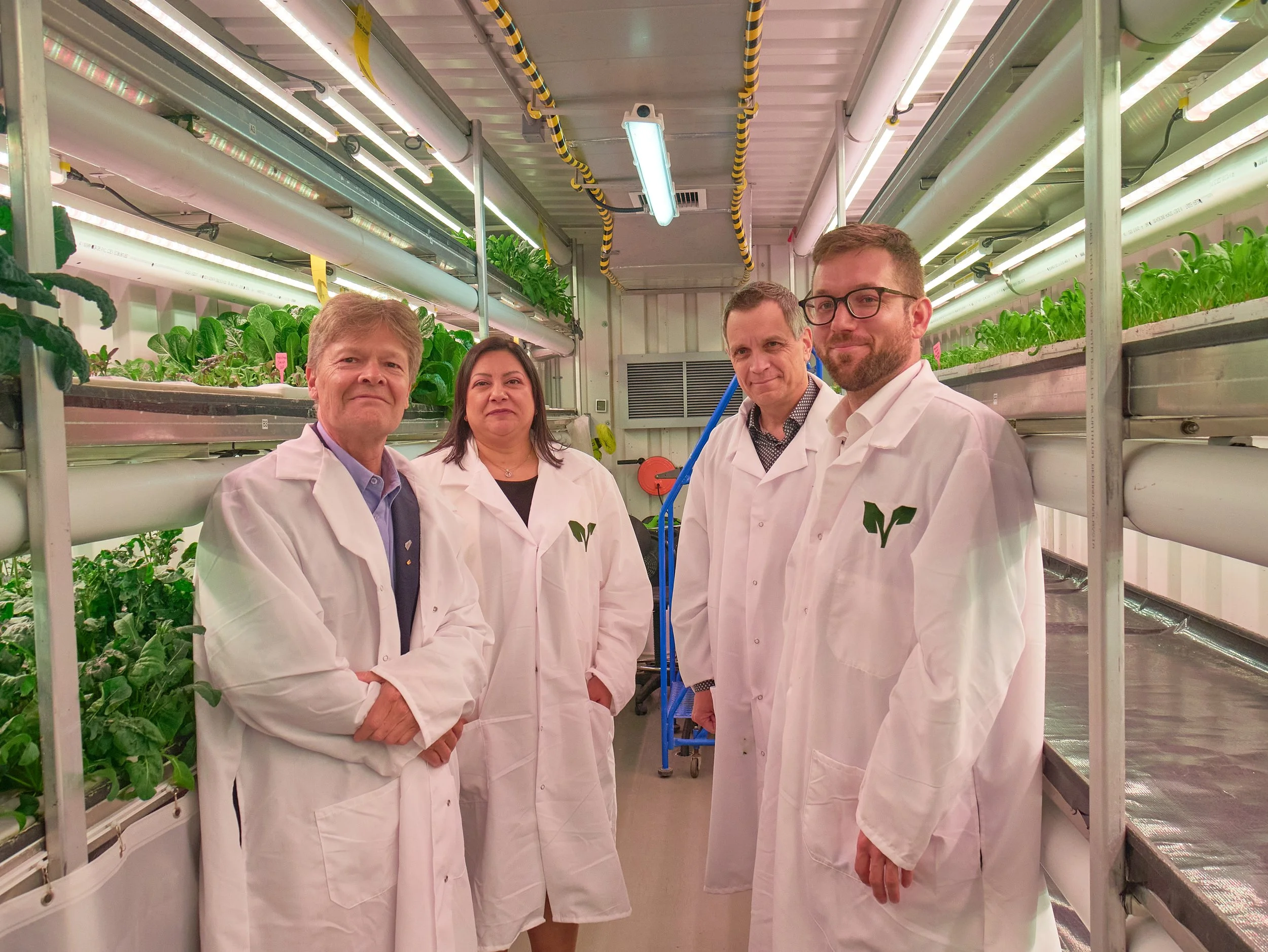
From left to right, Peter Tilley, CEO of The Ottawa Mission, Devinder Gill, RBC’s Regional President for Ontario North and East, Ottawa Mayor Mark Sutcliffe, Corey Ellis, CEO and co-founder of Growcer
The Ottawa Mission has been feeding the city's most vulnerable residents since 1906, and in recent years that work has only grown heavier. Peter Tilley, chief executive officer of The Ottawa Mission, has watched hunger in the city reach levels he has not seen before in his time there. For years, the produce that went into the Mission's meals came from whatever donations happened to arrive that week, in whatever condition they arrived in. Tilley wanted something the Mission's clients could count on instead.
"We used rely on many donations of in-kind of greens plus other vegetables. Given the sheer number of meals we serve across the city to people who would otherwise go hungry, having a sustainable supply of greens to supply healthy food for that many meals has been challenge. So to have a sustainable 100 per cent of the greens we’re getting through these vertical farms be ready to good into production, that’s an assurance.”-Chief executive officer of The Ottawa Mission, Peter Tilley
That assurance did not exist before, and the reasons why are familiar to almost every food organization in the city.
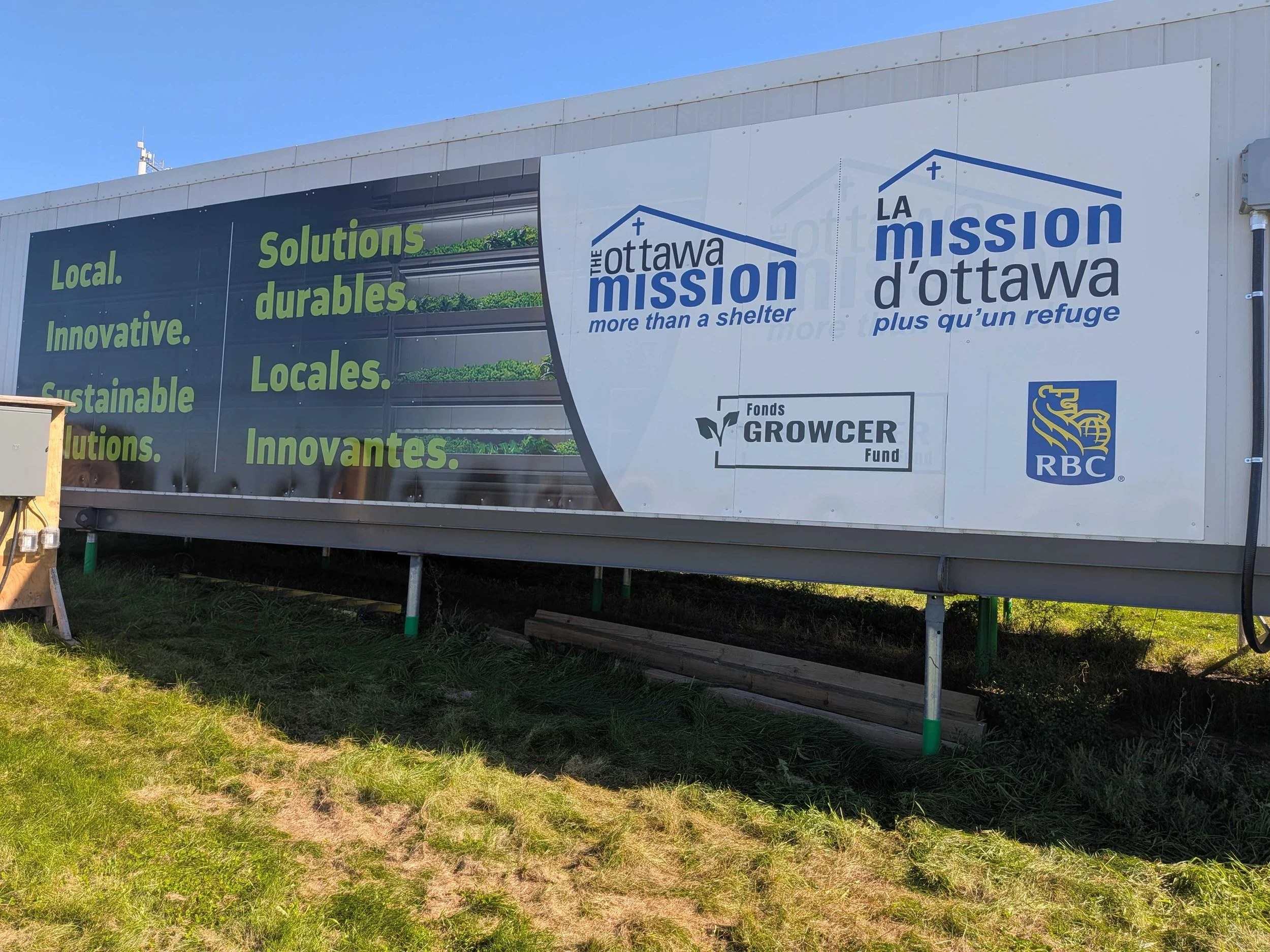
The new Ottawa Mission decal from Summer 2026
Opportunity: What Winter Takes Away
Ottawa's growing season runs roughly from May through September. During those months, many food organizations across the city can count on a steady trickle of local donations, farmers' surplus, and garden produce. Then the temperature drops. Ottawa winters routinely sit below minus 20 degrees Celsius, with cold snaps that push past minus 40. Local growing stops completely, and organizations are left sourcing greens from far outside the region, at exactly the time of year when demand for their programs tends to climb.
That shift also comes with a price problem. A head of lettuce that costs around one dollar in one week can run four dollars a few months later, depending on where it is grown and how far it has to travel. For organizations working from fixed annual budgets, often with volunteer labor and little room to absorb surprises, that kind of swing makes it difficult to plan more than a few weeks ahead.
Fresh greens are consistently the most requested item from the people these organizations serve. At the same time, grocery store donations have declined, and food banks have less to redistribute than they used to. Many organizations are left sorting through what does arrive and setting aside a significant share of it, on top of little to no cold storage.
At The Ottawa Mission, that pressure shows up at scale. The community kitchen prepares close to 2,000 meals a day. The food truck program, which started with one truck making five stops a week and serving 500 meals, has grown into two trucks reaching 43 stops and serving more than 14,000 meals a week.
"Currently, we're feeding 3,300 people every day in need that can't afford to go out and purchase groceries. They need our services, and this will enhance all our recipes. To be able to give fresh produce, making salads, and providing it to people so they'll be able to enjoy it and be healthy," Chef Ric Allen-Watson says.
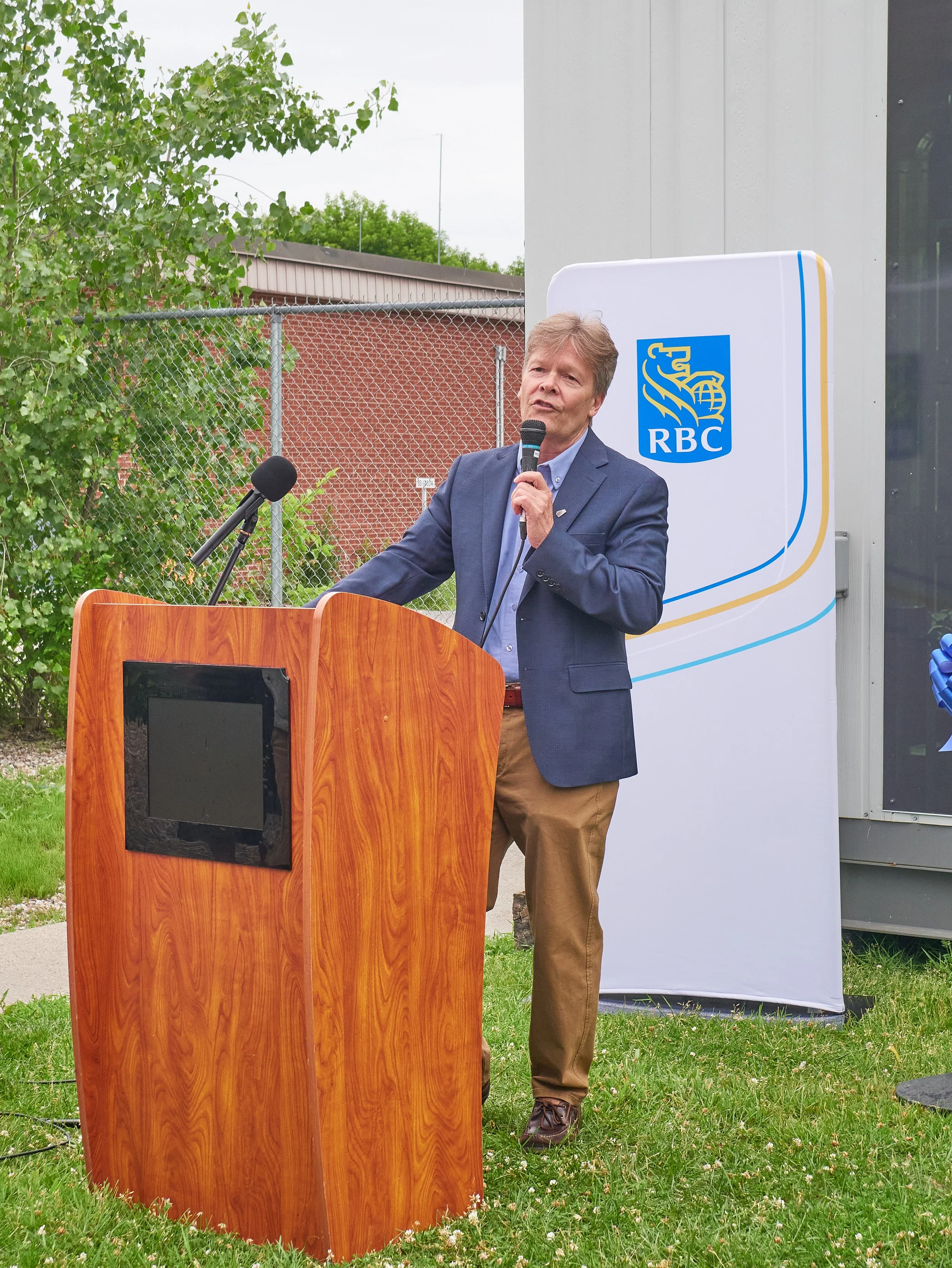
Peter Tilley giving a speech during the ribbon cutting ceremony
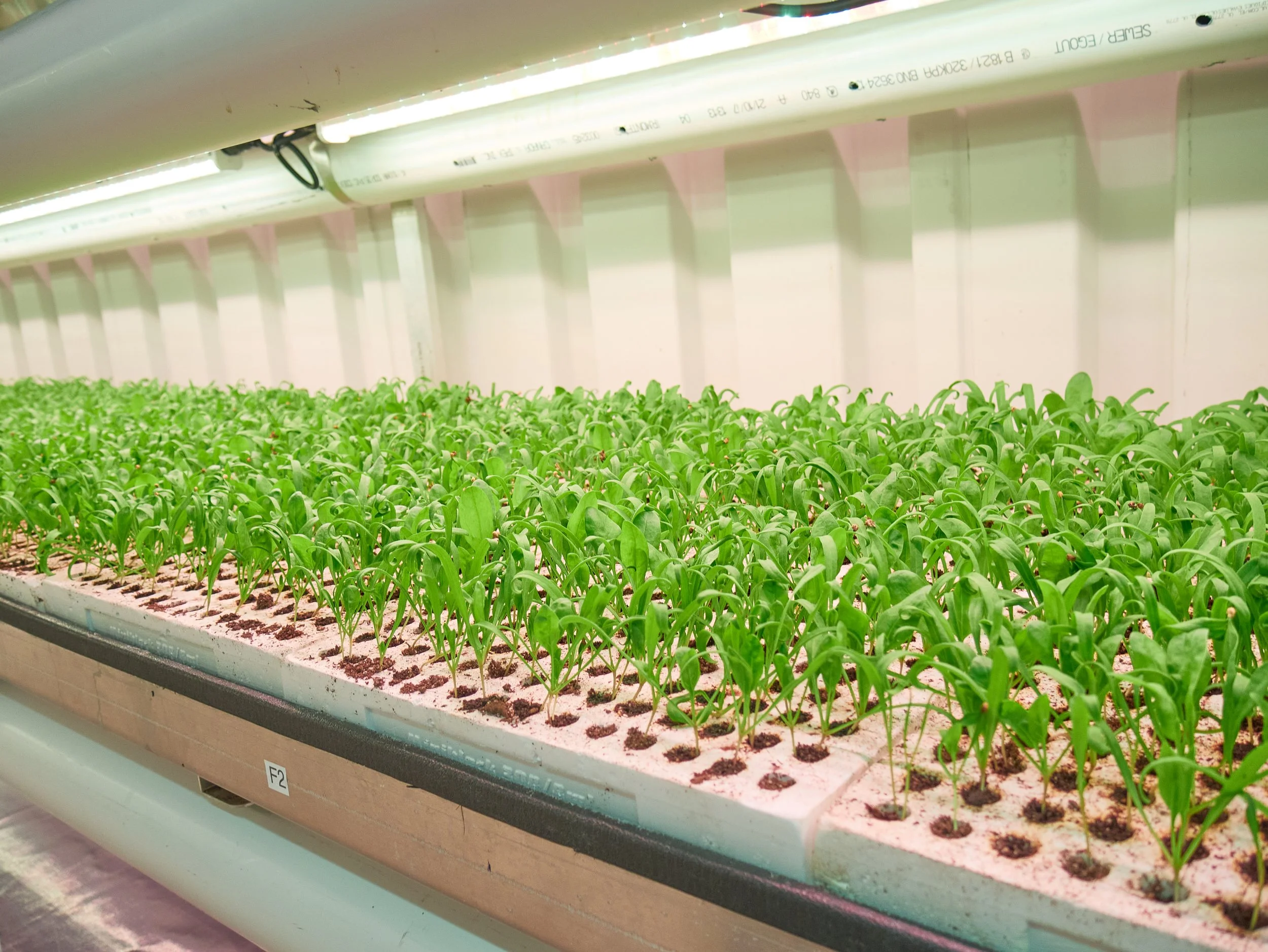
Inside the Growcer Farm
Solution: A Subscription, Not a Gamble
The Mission now operates two vertical farms capable of growing up to 20,000 lbs of fresh greens a year, grown indoors and independent of season or weather.
Why the Growcer Fund? Rather than purchasing the farms outright, the Mission operates as a standard subscriber to the Growcer Fund, receiving a complete vertical farm, ongoing maintenance, technical support and funding guidance for a set monthly cost. For an organization already spending $7,000 to $12,000 a month on produce, a subscription in the range of $4,000 a month is a straightforward trade, not a leap of faith. In the Mission's case, a $1.5 million donation from RBC to the Ottawa Community Foundation's Food Resiliency Foundation Fund covered that subscription upfront, similar to an organization prepaying a year of a service instead of paying it monthly. The arrangement underneath is the same one available to any operator who applies.
Because the greens now grow on-site rather than arriving through a rotating mix of suppliers, the quality is consistent and there is no spoilage in transit. What comes off the farm is what goes into the kitchen.
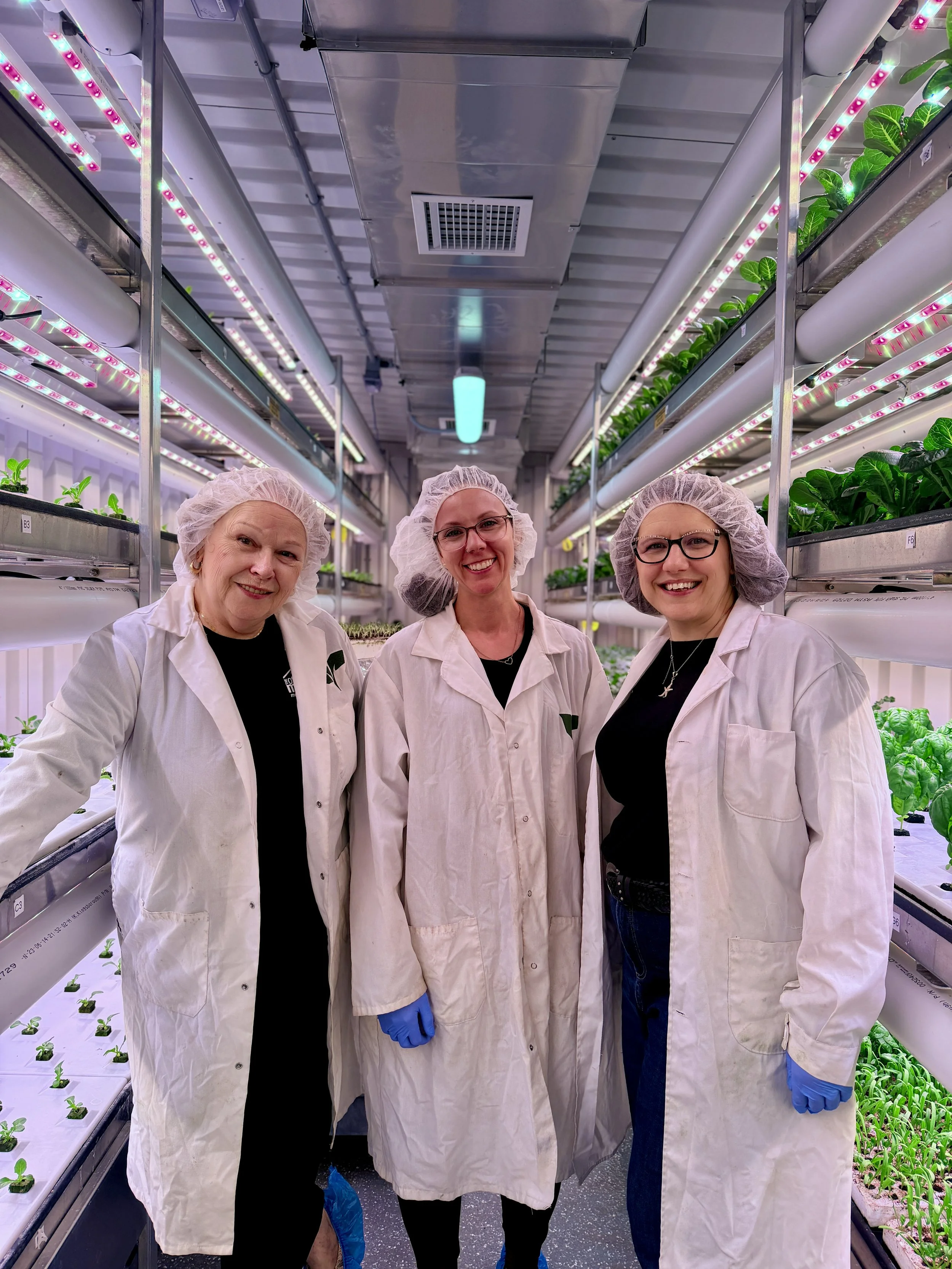
The farms have also become part of the Mission's food services training program, a free program that runs three times a year and graduates 82 to 90 students annually, with a job placement rate of 90 per cent over 20 years. Many of the students in the program are newcomers to Canada.
"They're going to get the opportunity to come to the farm and see the produce being grown, kind of a farm to fork idea. Many of our students are newcomers to Canada, so some of them don't know where this produce comes from. So let's give them the opportunity to learn about that," Allen-Watson says.
Expanding the Mission: More Eyes on Good Work
The farms' launch was not a quiet one. A ribbon-cutting event drew Ottawa Mayor Mark Sutcliffe and generated 20 mentions in local and national press.
For an organization that depends on public goodwill and donor support, that kind of visibility is not a distraction from the work, but rather part of what makes the work sustainable. A project built around fresh, local food, skills training, and financial practicality is the kind of story that draws in new donors and volunteers, not just headlines.
"It's been incredible to see the impact we can make in our own backyard when partners across sectors come together. This is just the beginning of what passionate organizations across the country can do to make local food part of their daily lives," Corey Ellis, co-founder and CEO of Growcer, says.
Community Impact
Fresh greens now reach every point of contact the Mission has with the people it serves. They are folded into recipes for close to 2,000 meals a day in the community kitchen. They ride along on food trucks to 43 stops across the city each week. And they are part of what the next class of food services students learns to grow, harvest, and cook with, before they ever set foot in a professional kitchen of their own.
The same pressures that led the Mission here such as a growing season that ends every fall, and prices that swing with the weather elsewhere, are playing out at food organizations across Ottawa right now. Two small farms are already answering them, one meal at a time.