
Hyper-Local Greens for Five Schools: Watertown High School
Project at a Glance
Launched: September 2025, Watertown, Massachusetts
Goal: Supply fresh greens to all five Watertown public schools while giving students hands-on science education through a new high-tech farming elective
Distribution: Salad bars and cafeteria meals across three elementary schools, one middle school, and the high school
Impact: The district's largest lettuce supplier is now its own students; the farm has drawn visits from the Lt. Governor, two members of Congress, and state education leadership
Operator: Science teacher is the lead operator with student volunteers
“I think the big conversation of knowing where your food comes from is essential in a lot of ways, so these guys are learning a little bit about the process, and via our classroom conversations, being able to look at more traditional models and discuss the fact that our lettuce is traveling 1 mile to its final destination, not 3,000 miles from California.”
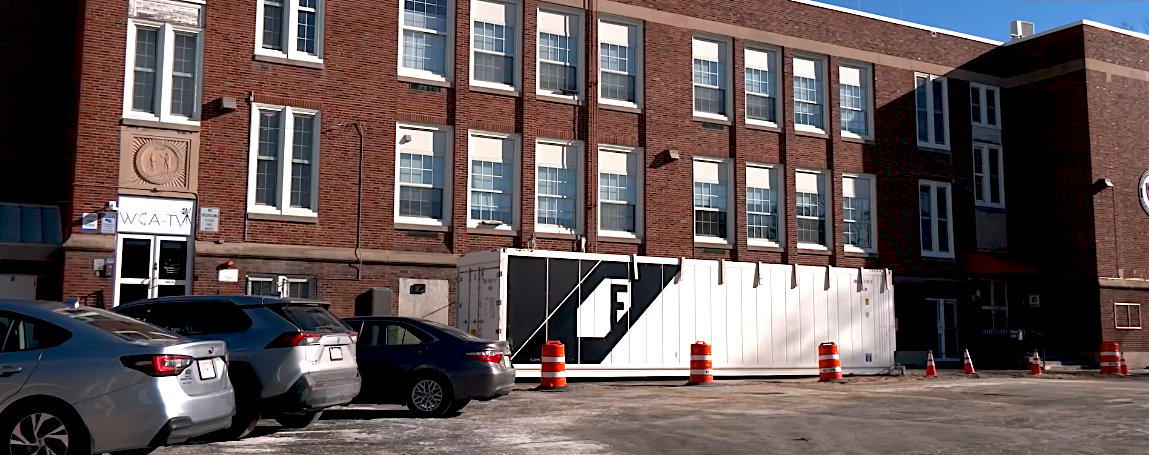
The indoor farm complements a 14-year school garden program and makes it year-round.
Opportunity: A School Built for the Future
Watertown is building a new high school on the footprint of the old one. When it opens in fall 2026, it is positioned to be the first Platinum LEED certified high school in the nation, completely off the grid with solar and geothermal energy. The district has invested in new or renovated buildings across all of its schools over the past seven to eight years. This is a community that is building for the long term.
The vertical farm was part of that conversation from the start. Watertown already had a 14-year school garden program running across its three elementary schools and middle school, connecting students to food through outdoor growing, composting, and cafeteria partnerships. The Freight Farm takes that commitment indoors and makes it year-round.
"I think it aligns with the desire to produce a new high school that is tapping into the future and planning for the future. With this hyper-local produce going directly into our schools, it was clearly matching that model and desire to get students' hands-on experience," Nabel says.
The high school has about 750 students. The district's five schools serve roughly 60 to 70 pounds of greens per week. Before the farm, that lettuce came from distributors sourcing across the state and region. Now it comes from across the street.
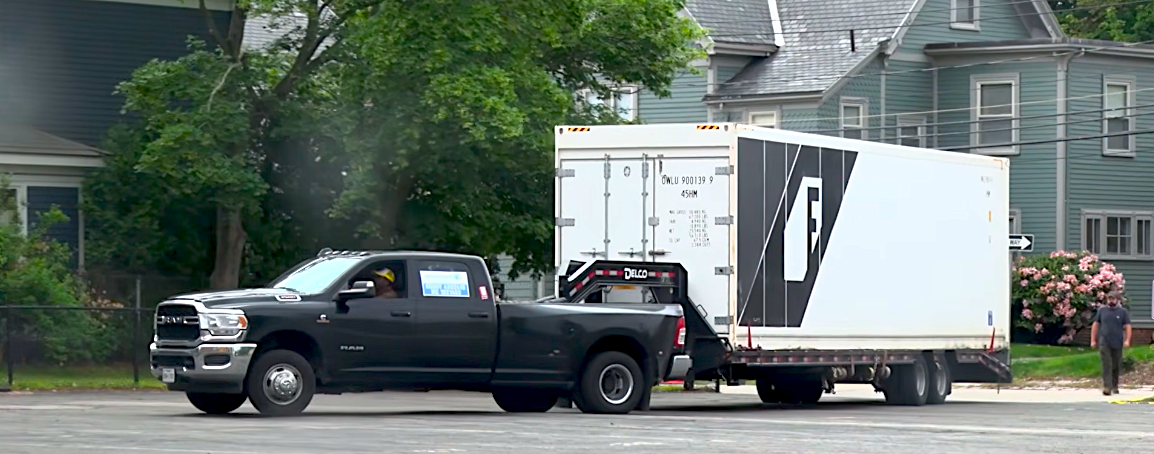
Solution: Getting the Farm Online
Growcer, which acquired Freight Farms and now supports the network of existing Freight Farm growers, played a key role in getting Watertown's farm operational. David Harris, former Director of Crop R&D at Freight Farms and now leading Freight Farmer support at Growcer, came out for a full day to troubleshoot the farm and get its systems running.
"I would not have gotten this online without that," Nabel says, adding that he chose to operate the farm at 25 to 50 per cent capacity to ramp up slowly.
That deliberate approach defined the first semester. From September through January, Nabel was solo in the farm, learning the computerized system, testing varieties, and building confidence before students arrived. He started with one wall of plants and worked his way toward filling all four.
The FRESH Grant
The project received critical support from the Massachusetts FRESH (Farming Reinforces Education and Student Health) program. Plus, Nabel has been an active partner with Mass Farm to School, attending events and speaking publicly about the program's impact. At one event, he stood alongside the organization's staff handing out samples of salad greens with a dressing made by the school's culinary students. "I'm a product of this organization, and we have it because of their support," Nabel says.
Farm as Classroom: Every Class Is a Little Field Trip
Because the new high school is still under construction, Watertown's students are temporarily in modular buildings about a mile from the farm. So every class period, Nabel loads 12 students into a 15-passenger van, drives them to the farm, does the day's work, and drives them back.
"I told them from day one that they're workers. They signed up for this, and we're gonna treat this like a job where you're coming in, and the goal today is to harvest 8 panels, so let's get to work. And we're putting music on in the background, and keeping it fun," Nabel says.
The students are mostly juniors and seniors. They are the first group to take the High-Tech Farming elective, a course Nabel designed around a four-pronged approach: environmental impact, the physics of lighting and energy, the biology of plants and botany, and the chemistry of nutrients and sanitizing solutions. Out of every seven-day cycle, students meet six times. Five of those days are hands-on farm work. One is a classroom science session where Nabel connects what they are doing in the farm to concepts from their earlier coursework.
"I really see this as almost a capstone class where I'm pulling from all the other science content they've had. I think it's written itself in many ways with that mindset," Nabel says.
Students seed, transplant, and harvest. They learn the process from seed to plate. And they see the results: their greens end up in salads, taco bowls, and other dishes served across the district. The farm also connects to the school's culinary program. Nabel regularly emails the culinary teacher to offer whatever is ready, whether that is basil, kale, or salad greens. The culinary students, in turn, have used farm-grown produce for public events.
When the new school opens in September 2026, the van rides end. Students will walk across the street.
"They're seeing every class as a little mini field trip," Nabel says. "It's been fun so far."
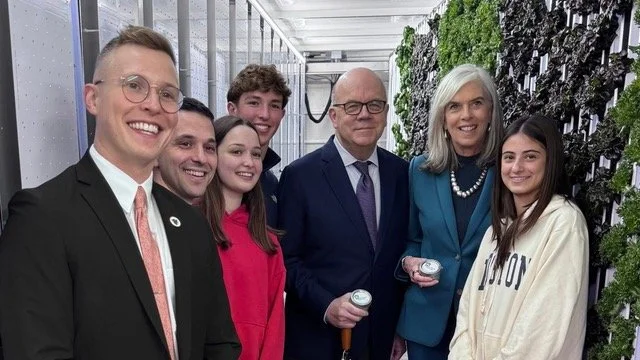
Congressman Jim McGovern and Congresswoman Katherine Clark toured the school's lunch program and the Freight Farm.
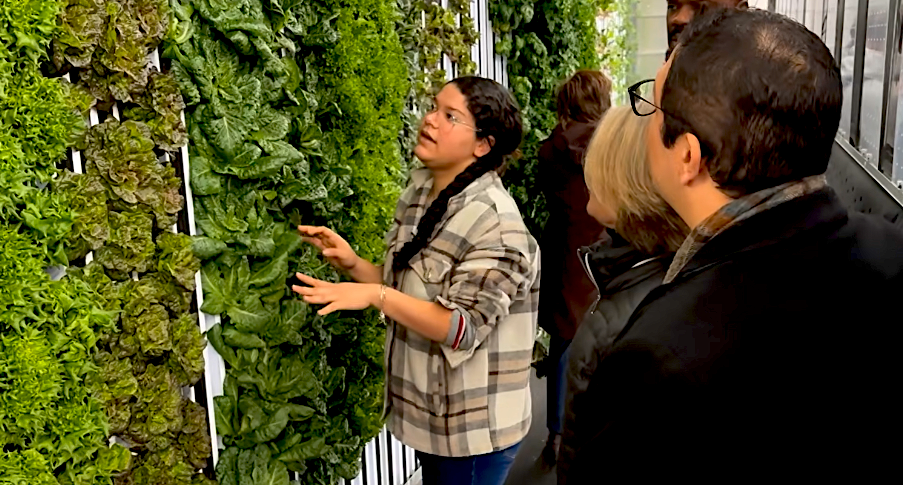
Students see the results: their greens end up in salads, taco bowls, and other dishes served across the district.
Community Impact
The produce follows a simple path. Students harvest greens in the farm, store them in a refrigerator in the harvest room, and a local delivery person picks them up and brings them to kitchens across the district's five schools. The farm now supplies all of the greens for the district's salad bars.
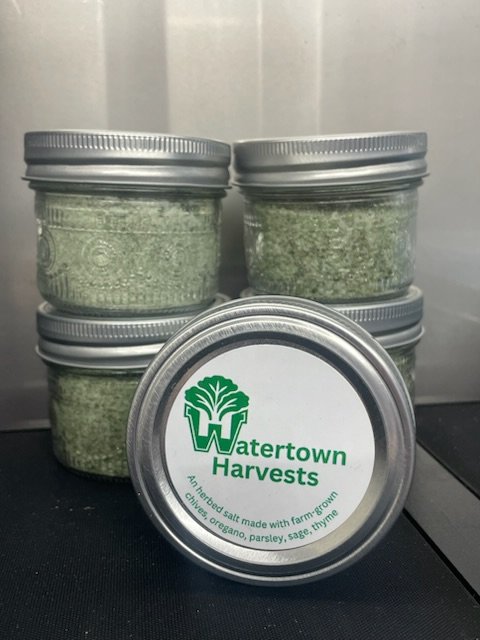
The herbed salt is a big hit at farmers’ markets.
Brandon Rabbitt, director of school nutrition for Watertown Public Schools, has described the farm as the district's largest lettuce vendor to Watertown News. Before the farm, the district prioritized sourcing its produce locally from around the state and region. About 40 per cent of its produce was sourced locally, and now with the farm that percentage is higher. Rabbit told Watertown News: “So they’re our largest lettuce vendor now. It doesn’t get any more local than that. Students are actually growing the lettuce, harvesting the lettuce, and then eating the lettuce, and then composting anything left over. So it’s a full circle.”
The farm's earliest harvests, before the school supply chain was in place, went to the Watertown Community Fridge at the public library.
The school has even participated in a pop-up event with the local farmers’ market and sold their lettuce directly to the community alongside a special herbed salt. The herbed salt is a flaked sea salt that is mixed with dried herbs that students grew in the farm, and then dehydrated before running through a coffee grinder to turn into a dust.
“It’s been a big hit,” Nabel says, adding that the school sells the dried herbs on their own but the herbed salt sold out quickly at the farmers’ market pop-up. “The herbs are incredibly fresh and taste great so I am not surprised that these were popular. Multiple people have told me how great their salad dressings have been when they used our fresh herbs. I plan on growing two panels of herbs on each wall next year.”
The project has drawn attention well beyond the district. In February 2026, Lt. Governor Kim Driscoll and Secretary of Education Patrick Tutwiler visited the farm as part of the official FRESH grant announcement. Driscoll called Watertown "really ahead of the curve." A month later, Congressman Jim McGovern and Congresswoman Katherine Clark toured the school's lunch program and the Freight Farm. McGovern called it "really a model for the rest of the country."
"Everyone who has tasted the lettuce loves the fact that it's local," Nabel says.
This is still year one. Nabel is learning which varieties perform best, figuring out the rhythm of four-wall turnover, and exploring what comes next. There is interest in a farmer's market. There is room to expand enrollment. There is a culinary program ready to do more with farm-grown produce. And there is a brand-new, LEED Platinum high school opening across the street in the fall, with a teacher and 24 students who already know what they are doing.
Watertown is equipping its students for the future, not only in how it teaches but in what it builds.
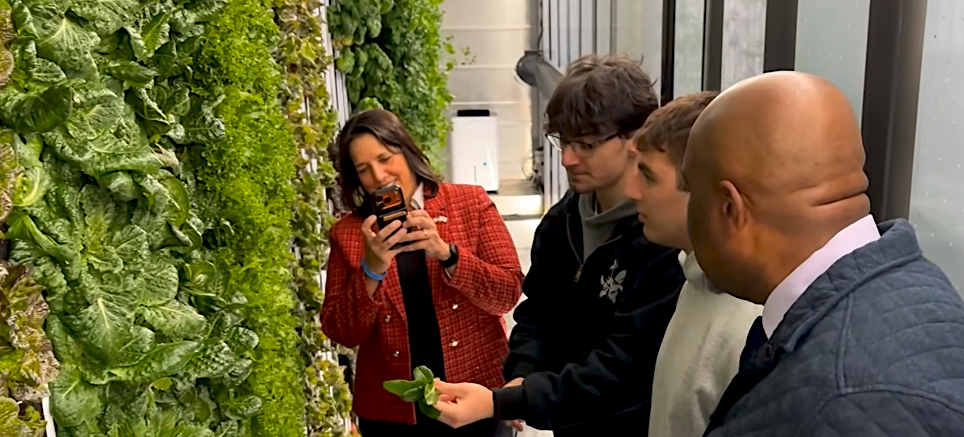
The project has drawn attention well beyond the district. In February 2026, Lt. Governor Kim Driscoll and Secretary of Education Patrick Tutwiler visited the farm as part of the official FRESH grant announcement.