
You Have the Vision for a Community Food Project. Here's How to Fund It.
If you're reading this, you already know your community needs better access to fresh, local food. Maybe you're a school administrator watching students be bored in biology class. Maybe you're leading a nonprofit tired of importing produce from thousands of kilometers away or relying on inconsistent donations. Maybe you're part of an Indigenous community ready to take control of your own food system.
You have the vision. But when it comes to making it real, the same question keeps coming up: How do we actually pay for this?
We hear it every week. And here's what we want you to know: hundreds of communities have asked that exact question, and gone on to fund, build, and launch thriving local food projects. We've been part of those conversations, and we can be part of yours.
What We Covered in Our Funding Webinar
We recently hosted a live webinar called How to Get Your Community Food Project Funded, led by Holly Todd, our funding team lead. Holly has helped communities secure over $11 million in funding for food projects, with a success rate four times the industry average.
The webinar walked through two big themes: how to plan a project that attracts funding, and where to actually find the money.
On the planning side, Holly introduced the Project Success Framework, the methodology Growcer uses with every community. It covers four pillars: implementation, operations, financing, and distribution.

Implementation is the "how" of your project. Where will the farm go? How will it connect to power and water? Do you need permits? This is where you demonstrate shovel-readiness, collect quotes for site preparation, and use visual mock-ups and photos to help funders picture the finished project.
Operations is the "who" of your project. From staffing to volunteers, to building out workforce development programs or classroom curriculum, this pillar shows you've thought beyond launch day. It's also where partnerships come in, and it answers the question funders care about most: how will this project create impact for years to come?
Distribution is the "where" of what you'll grow. A clear plan for where your food will go and who it will serve, whether that's school nutrition programs, donations to food banks, direct sales to community members, or all of the above. This is where letters of support from community partners carry real weight and where the story of your project comes to life.
Financing is the "numbers" of your project. A detailed breakdown of project costs, connecting with grant or funding opportunities, or applying for Growcer Fund - a pay-as-you-grow model that allows you to grow through a monthly payment instead of a direct purchase. When the first three pillars are strong, this one follows naturally. A compelling project plan encourages leadership buy-in, attracts funders, and provides a clear path forward.
No two projects look the same, and the Growcer team works alongside you to figure out the missing pieces. Only have one pillar figured out? Get unstuck by starting the conversation.
On the funding side, Holly broke down six types of funding: federal programs, provincial or state programs, regional development agencies, community and family foundations, national foundations, and corporate sponsors. The best-funded projects blend several together.
A Real Example: High Prairie School Division
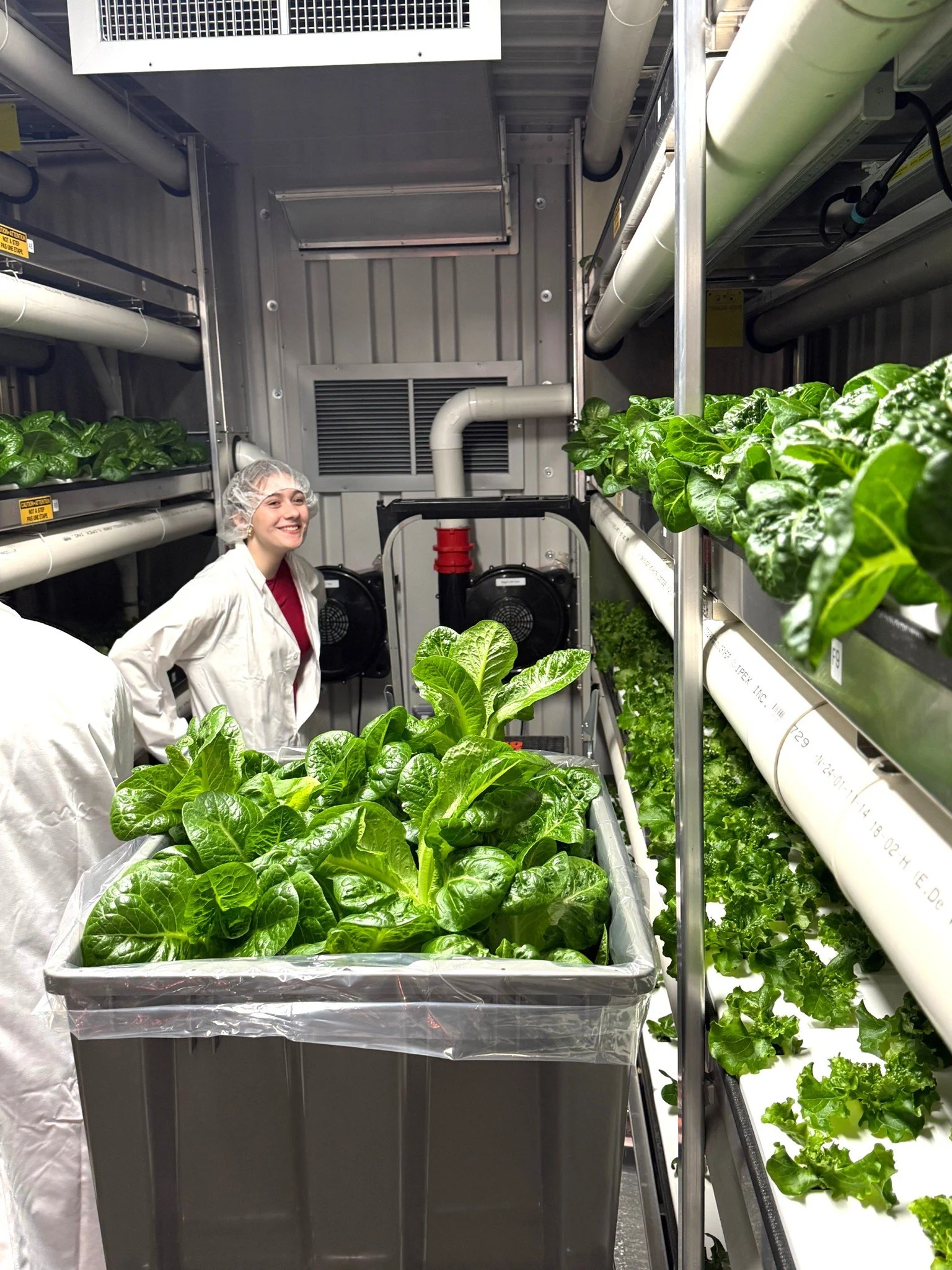
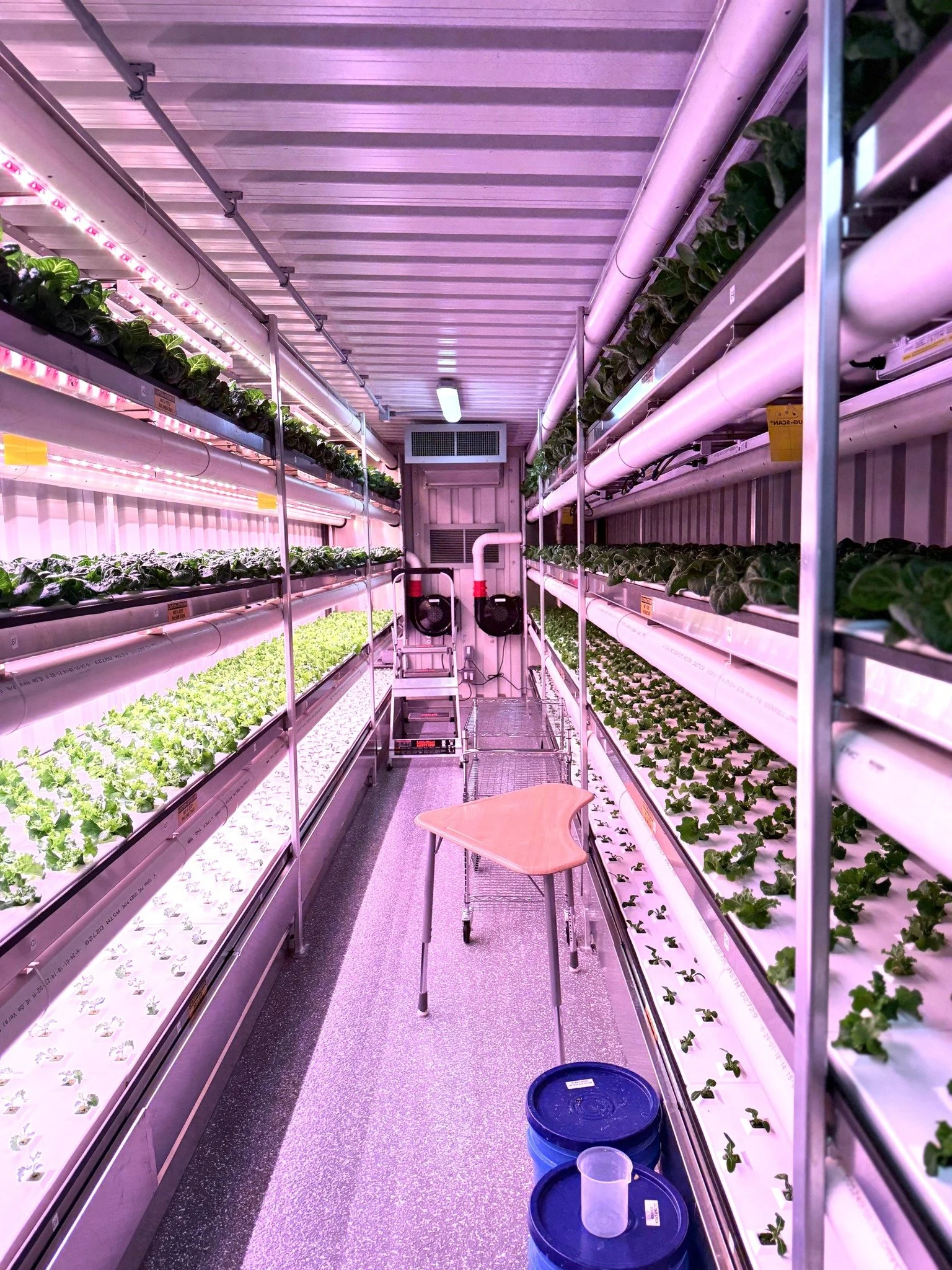
We were joined by Brennan McDonald from High Prairie School Division in northern Alberta. As Brennan put it: "Our kids were not eating healthy." The community didn't have access to quality fresh produce. They secured funding through a federal grant, a family foundation donation, board contributions, and smaller community grants, then put a Growcer farm right beside their high school.
Today, students earn credits through hands-on farm work. Salad bars run twice a week, and as Brennan told us, "the community response to the farm has been humongous." They donate 35% of every harvest to the local food bank, sell to restaurants, and serve communities within a 200-kilometer radius.
Brennan's advice for anyone trying to get leadership buy-in? "Take a look at the policies that are offered by your board or your organization and directly show them how the farm will meet those needs, because then it's really hard to say no."
“Take a look at the policies that are offered by your board or your organization and directly show them how the farm will meet those needs, because then it’s really hard to say no.”
More Than Food: Aligning Impact with Funding Streams
Are you only looking for "agriculture" grants for your food project? You might be leaving money on the table. A huge part of the webinar was Holly's breakdown of how to think creatively about where funding comes from. By focusing on the ripple effects of your farm, like creating jobs for local youth or improving community health outcomes, you can unlock an entirely new world of funding opportunities.
As Holly explained: "If you're a school, for example, there's also youth empowerment, youth employment, workforce development, you know, community health is another piece. Like all of these kind of problems that you're solving can help contribute to what sort of funding you can apply to." She also walked through how a rural community that typically imports produce from 2,000 kilometers away and reduces that to two kilometers isn't just solving a food problem. "That has a lot of impacts on supply chain resiliency. So then you could think about applying for funding, like tariff funding relief or other like, like Community Economic resiliency funding. And then if you also think about that reduction in supply chain, you can think about the carbon emissions that are reduced by taking trucks off the road. So then you can apply for environmental sustainability funding."
Think about it: a single farm can touch food security, youth training and employment, workforce development, health and nutrition programming, environmental sustainability, supply chain resiliency, equity and reconciliation work, economic development, and community capacity building. Each of those threads connects to a different type of funder.
The takeaway: the problems your project solves and the benefits it creates should shape where you look for funding, not just the category your project falls into.
The Growcer funding team sees this play out with clients all the time. Mattagami First Nation secured environmental sustainability funding by framing their farm around emissions reduction. Sik-e-Dakh First Nation tapped into economic development funding for their project. And 'Namgis First Nation in Alert Bay leveraged innovation funding through a university-affiliated program. Same type of project, three completely different funding streams.
Holly also reminded attendees not to overlook past funders. "Sometimes you might overlook your past funders, but they're a great resource to draw on if you have a new idea for a project."
How Growcer Helps You Get Funded
“At the end of the day, it’s your application - but with support.”
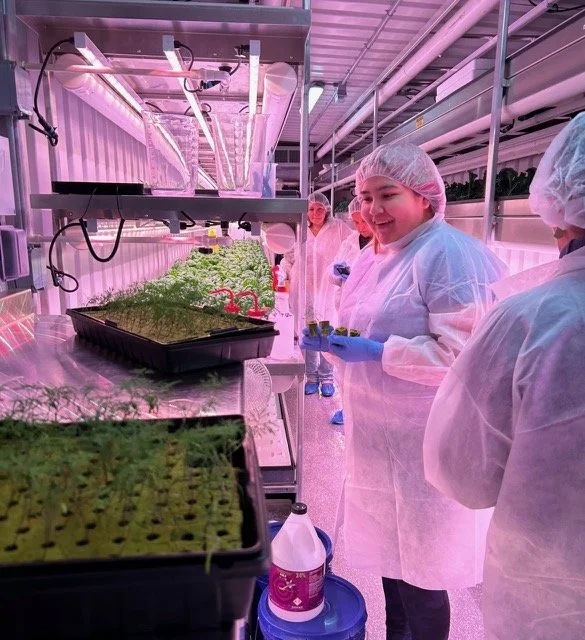
'Namgis First Nation in Alert Bay, B.C. raised project funding to launch two farms and a regional training program.
Finding funding can feel overwhelming, but you don't have to figure it out alone. Our funding team works with communities at every stage, from identifying opportunities to coordinating applications.
Our flagship offering is the Funding Mobilization Package: a 12-month engagement where a dedicated funding strategist learns your community, your goals, and your constraints, then works with your project champion to advise on a strategy combining government grants, private foundations, regional sponsors, and philanthropic funders into a plan that works. Your project champion works alongside our team, bringing the community knowledge that makes every application stronger. At the end of the day, it’s your application - but with support.
This is the same approach we used to help 'Namgis First Nation in Alert Bay, B.C. raise project funding to launch two farms and a regional training program.
As a small organization without a grant writer on staff, ‘Namgis Business Development Corp. (NBDC) needed help to build up their capacity. Growcer provided comprehensive wraparound support that made the difference between a good idea and a successful project.
“For a lot of nations that is an issue. You have to pay a grant writer, find a grant writer, and the person isn’t always from the community. It’s important to know that Growcer did listen to us and what worked for our community, what would be put in the grant application that was possible or not possible,” Gaby Wickstrom, Interim CEO of NBDC, says. “[They] really took our feedback.”
Sometimes the hardest part isn't the farming or even the fundraising. It's feeling stuck and not knowing where to start. That's where letting a trusted partner into the conversation can change everything.
Watch the Full Webinar
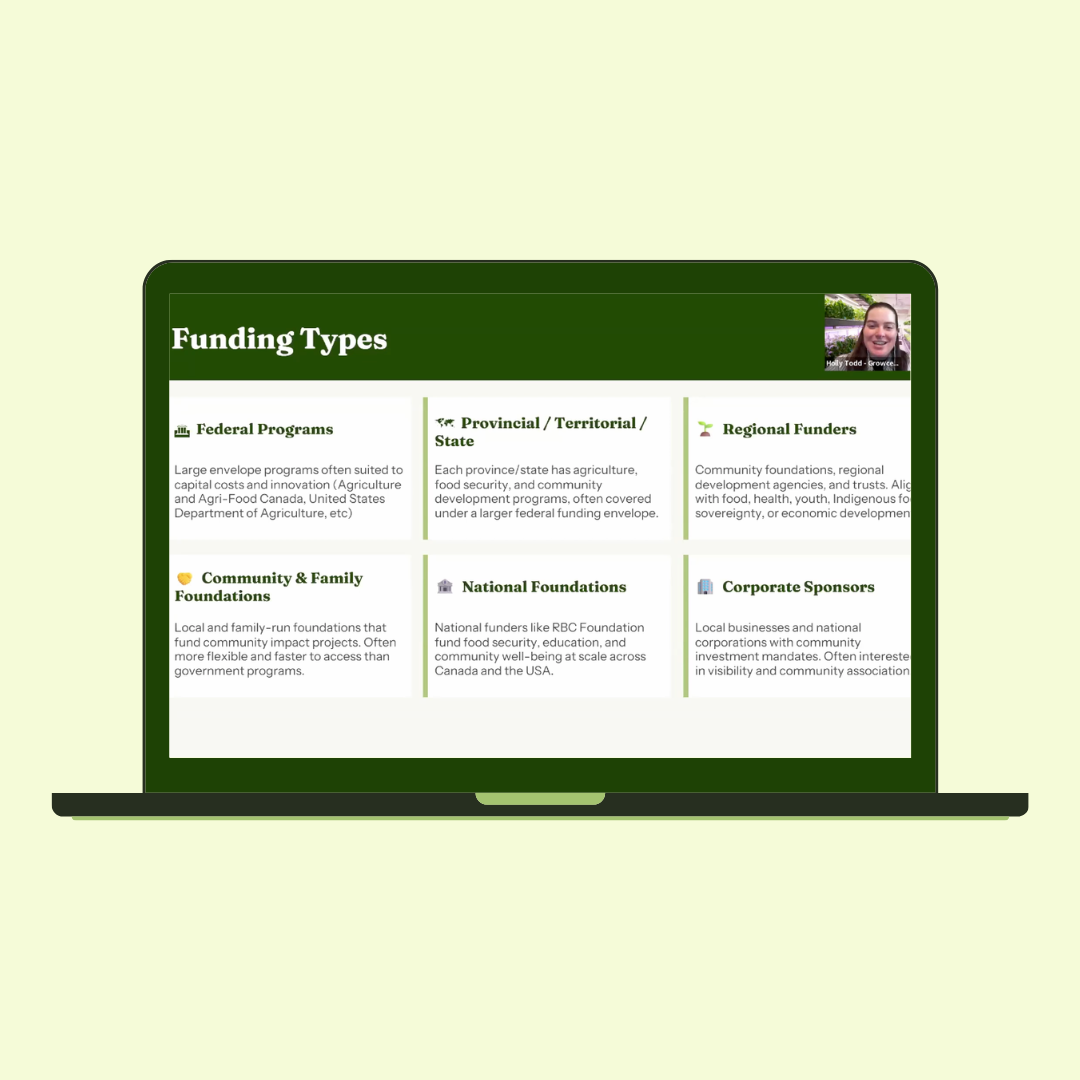
This post only scratches the surface. The full recording includes Holly's walkthrough of how to map your funding ecosystem, how to handle applicant contribution requirements (hint: cash isn't the only answer), and live Q&A with real answers from people just like you.
Ready to talk about your project? Reach out to the team or visit thegrowcer.ca/get-started to explore top resources.